Peter Dingus Interview | The End of the World Explained | Author Conversations with Chris Dabbs
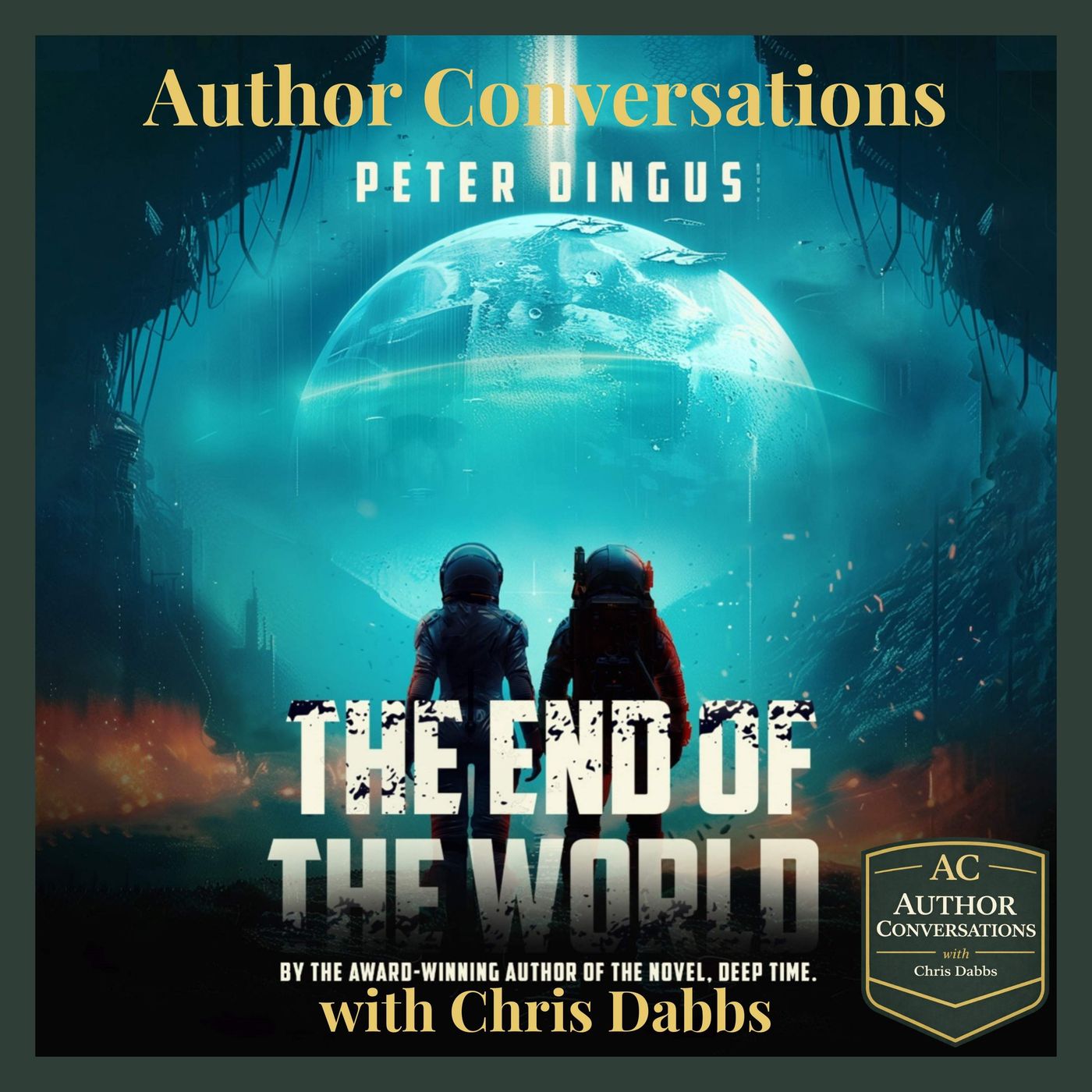
They explore the ideas behind the story, the inspiration for the book and how Peter approaches big, existential themes through fiction.
This is a conversation about storytelling at scale — and what it means to imagine the end of everything.
Before becoming a novelist, Peter Dingus worked in physics and engineering with organisations including École Polytechnique in Paris, CERN in Geneva and Lockheed. That scientific background shapes the way he approaches storytelling — blending real science, deep time and philosophical questions about humanity’s future.
In this conversation we explore:
• The ideas behind The End of the World
• How physics influences science fiction writing
• Why civilisation itself may be humanity’s greatest challenge
• The relationship between science and imagination
• What science fiction can teach us about our future
This long-form interview explores the thinking behind Peter Dingus’ writing and the questions that drive his work.
Watch the full video interview on YouTube: https://youtu.be/we0FhgZKe1M
00:00 Introduction
01:10 Peter Dingus background
05:40 From physics to fiction
12:15 Writing The End of the World
20:30 Science and storytelling
32:00 Civilisation and survival
44:20 Humanity’s future
54:30 Advice for writers
59:00 Closing thoughts
Become a supporter of this podcast: https://www.spreaker.com/podcast/author-conversations-with-chris-dabbs--6905413/support.
Every book has a story beyond its pages.
In Author Conversations, broadcast journalist, presenter and newsreader Chris Dabbs sits down with the writers behind some of today’s most fascinating books to uncover the research, experiences and ideas that never made it onto the printed page.
Featuring bestselling and emerging authors from around the world, each episode goes beyond the blurb to explore the real stories behind the writing.
From untold historical discoveries and groundbreaking scientific research to personal journeys, business insights, faith, true crime and the human experience, every conversation is designed to inform, challenge and inspire.
Drawing on more than two decades of professional interviewing across radio, television and digital journalism,
Chris creates thoughtful, in-depth conversations that give authors the time and space to tell the stories that matter most.
Whether you’re searching for your next great read, fascinated by the creative process or simply enjoy intelligent, long-form conversations, Author Conversations offers a unique opportunity to discover the people, ideas and experiences behind remarkable books.
Real authors. Real stories. Real conversations.
Speaker 1: The question i'd ask an alien is, you know, in order to come from one start to the next, the amount of power that you have to be in charge of is unimaginable. And you know, we have like these little things like atomic bombs, and we're always like one step away from self annihilation. So I'd ask them, presumably you came from where we came from, how did you get to the other side of it?
Speaker 2: Hello, and welcome to Author Conversations. I'm Chris Tabs, broadcast journalist with the BBC and Times Radio. That's the Times of London, by the way, just so you know, And today I'm joined by the award winning science fiction writer Peter Dingis. He's the author of Deep Time, add the new novella at the End of the World. Wow, that's going to be something interesting to get into. But Peter's background, first of all, is absolutely fascinating. Before becoming a novelist, he had a long career in physics and engineering.
Speaker 2: He works with organizations including a Cold Polytechnique in Paris, CERN in Geneva, Lockheed and the super Conducting super Collider Projects in Dallas, Texas. So he's really been busy and all the time he's found time to earn a PhD in physics as well. Peter, you have been busy, But Peter, you're now an award winning science fiction author, and you're kind of known for blending rigorous scientific thinking with character driven, speculative storytelling. Across your scientific career, He's authored more than sixty five peer reviewed scientific papers, and he first came to writing with his novel Proteus Rising.
Speaker 2: The book began, really, I think, as a therapeutic writing exercise after a sporting accident which left him with a spinal cord injury. But we'll get into that later on. He later published the anthology Worlds in Transition and the novel Deep Time Now. Deep Time won the Story Trade Award for Best Science Fiction Novel of twenty twenty four and first place in the International Sigmas Award for Best Science Fiction of twenty twenty four while done there. His latest work, The End of the World, is a philosophical science fiction novella set on Mars.
Speaker 2: It explores humanity survival after catastrophe and asks what might happen if humanity's last survivors were forced to rebuild civilization on Mars, and what they might discover buried beneath the planet's surface. Peter, this sounds great, I got to say, and I know we're really going to look forward to talking to you. So welcome. It's great to have you here with us. Thank you excellent. Well my first question, then, you know, really is I think just to try and understand where you come from more than anything else.
Speaker 2: So what led you to write science fiction after a career in science fact, I guess well, you know, you.
Speaker 1: Know what's interesting and one of the reasons why I've written science fiction is I got into science because I read science fiction. So when I was a kid, I read a lot of science fiction, you know, like all of the old authors, Arthur C. Clark, Robert Heinlein, versul La Gwynn, Stanislaw Lamb, all of those authors. And you know you happen to mention the end of the world. Well, that came from that came from your side of the pond. I read a book a long long time ago by Nigel Shoot called On the Beach, and On the Beach was I mean, it made a huge impression on me.
Speaker 1: And the derivative of that, many many years later is the end of the World. So it's sort of the other way around. I read these books, you know, back in those days, you know, Spot Naked, Gone Up. We've been in the so called space age. You're a kid, You're watching Guy's Land on the Moon, and you wanted to be part of.
Speaker 2: It, you know.
Speaker 1: So that's what got me into science and then subsequently, many many years later, having been a scientist. You know, I basically thought, well, you know, writing science fiction would be a great way to connect with people emotionally about the things I care about. So that's a you know, storytelling. I mean, it's very emotional, an emotion makes a huge impact on people. And then that was the that was the you know, sort of the impetus.
Speaker 2: If you're enjoying this conversation, you can find the full interview and more author discussions by searching author Conversations with Chris Stabs on your podcast platform. Wow, that's it's amazing. And yeah, you know, never shoot, I read that as a as a young teenager as well. On the beach. That really was quite harrowing, I think, to reading that book, So that's interesting, isn't it. I Mean, funnily enough, I watched the film again recently, and I think there's equally as harrowing still, isn't it.
Speaker 2: You know?
Speaker 1: Yeah, I mean, you know, I mean that that came out at a time when you know, when I was a kid in middle school. You know, you get under the desk, there's an alarm, you get under the desk, remember that, And so it was very real, you know, it wasn't just like sort of an exercise in in the fantasy. I mean, it was very real. So and it made a huge impression. So that the novella The End of the World, what it does is it explores, you know, how do people feel when it actually happens, and you do it on Mars, so that they're they're isolated from that.
Speaker 1: But you know, in in the in the in the beginning of the end, they're hearing from the people who are basically ceasing to exist, and now they're thinking, well, you know, now, what what do we do now? And of course there's there's all kinds of lament. People regret, like, you know, things that happened in their lives, the fact that they haven't thought about things that were important and now they're isolated and all these people that cared about and they'll never see them again, et cetera. Et cetera.
Speaker 1: So you know, when you write fiction like this, you want it to be you know, it has to be exciting. I mean, people read, you know, they read stories because they love stories, they love the characters. They want it to be exciting. But the other thing is you might want to have it work on several levels, you know, and if it does work on several levels, then it resonates with the reader, and the reader, you know, the reader gets into the story. So that was the idea. And unlike On the Beach, I don't know if you've read this one or listen to it as an audiobook, but it goes, it goes someplace really unexpected.
Speaker 2: Well there's not havny spoilers going, but no, I mean, yeah, I think that's the thing. You know. On the Beach is, Yeah, it's quite I guess, seminal in terms of those sorts of books. But you don't see much of this happening in Hollywood, do you, you know, in terms of the movies. Really looking at things like this.
Speaker 1: Things have really changed, you know, things have really really changed. And you know the thing is for people like me who write the kind of fiction I do, I mean, it's not it's not really a young person's fiction. It's not, you know, but I hope that young people read it, and I hope that young people listen to it because, you know, I think that that sense of wonder it's sort of been lost in the fact that you know, now it's like how much cgi you know, how many you know, how many fistfights? You know, it goes on and on and on, and you know, what you'd like to have is something a little bit more contemplated.
Speaker 1: Even though even though you want it you want it to be exciting and you want it to be a page turner, you still want it to be you know, you want it to be grounded in people's experience. So yeah, and that's exactly I want to just I just want to make one more plug for the End of the world. If you happen to have a Spotify account, you can listen to it for free.
Speaker 2: There you go, So everyone onto Spotify, search for the End of the world, and there you are done.
Speaker 1: You have to do a say Peter Dingis it will come up excellent.
Speaker 2: Okay, good, so we don't worry. We'll have that link in there as well for people who who don't know how to do that. So we'll put that into the show notes and things fantastic. I was just going to say, actually, that's one of the things that Shoot did quite well, wasn't It was to make the film sort of and the book kind of, I guess, really human, and in some respects we'd say it kind of plods along, you know, because you've got all the human interaction going on as if nothing's really happening, and it all kind of creeps up on them, doesn't it.
Speaker 2: But that's enough of that, because let's talk about your books, right. So at the End of the World. You know, you often described as a hard science fiction writer. Okay, now this was obviously got something to do with your training and your experience, right, But how much of the physics in the End of the World is grounded in real science?
Speaker 1: Well, well, you know, the thing is, I've been I've been interested in a couple of things that I think are are big today. I've been interested in genetic engineering. I've been interested in AI, and been interested in alien contact, you know, and I have like a very different take on some of these. For example, of Proteus Rising. You know, Proteus Rising one of the central characters, as a quantum computer. It was, it was written and by the way, I've written a lot of AI. You know, as a scientist, one of the things that you know, so what do you do as a particle physicist?
Speaker 1: Right, you either build detectors or you analyze data. And the data the data is so complicated that years ago, I mean thirty years ago, we were analyzing data using neural mats. So I've coded a lot of neural mats and I you know, I mean, the only thing that's really changed now got oh, you know AI has just been invented. No, actually it was invented thirty or forty years ago. I mean, it's the sort of the same algorithms. The thing is that the hardware has gotten so much better. That's the thing that's made.
Speaker 1: And then since the hardware is so good, you know, you put it out into the public, the public interacts with it, and you know, it becomes a phenomenon. But in Proteus Rising, you know, back in two thousand and six, I was talking about quantum computers and you know who had heard about quantum computers back in the day. So basically Proteus Rising was it was a story about quantum computers and genetic engineering, and it also has its roots in a novel, and the novel that sort of inspired it, strangely, strangely enough, was all quite on the Western Front.
Speaker 1: Weird, isn't it? Because I mean, how do is proteus rising on Mars? How's that all's quite on the Western Front? Well, what it is is four hundred years in the future, when you know you have a civilization on Mars that's different from the civilization on Earth. You can think about it at like England and America. Right, So you have a lot of a lot of unhappy people on Mars because they're being exploited. Right, So there's a lot of riots in the streets. There's all this kind of stuff. And the story centers around this expat as scientist who's he's discovered a new type of quantum computer.
Speaker 1: It's it's you know, it's it's actually sentient and awake. He comes to Mars. He's really unhappy with his life on Earth. It's like, think about you're in England, you're in debtors prison. All of a sudden, you get out of Debtor's prison, you get on a ship and you come to America and you know, maybe you can maybe you can thrive, you know. So that's that's his experience. But a lot of the stuff that happens on Mars is based on science. I mean, Mars is a very it's a poisonous planet, right, I mean it's got tons of radiation, it's got perchlorides and soil, it got blah blah blah, it's got no atmosphere to speak of.
Speaker 1: So when when people immigrate to Mars, they have to go through genetic therapy, right, you have to. You have to go through to make you more radiating, radiation resistant, bigger lungs. So so there's a there's a big department of reproductive affairs, and and what what happens is it gives this guy and a geneticist of a colleague that he meets on Mars the opportunity to have this quantum computer spin up like a really really really different uh genetic code for human beings. And he goes to the clinic and he he he changes the genetics of a bunch of kids in the embryo stage and haven't been born yet.
Speaker 1: And you know, when they're born there, you know, they seem like normal people. And the story takes place fifteen years later when these these traits, these these new traits start to materialize and it's you know, in that world, there are several several different types of people. There are people like you and me. They're called normals, and then there are people who are called moderns, and they're like the sort of genetic enhancements you'd expect, you know, they're they're more handsome, they're more physically fit, they're smarter, you know, all this stuff, but it's all superficial.
Speaker 1: What the quantum Computer has done is he's really it's really changed the human soul. So these people are really different. And the story starts fifteen years later. As they reach puberty, they start to become different, and the government on Earth finds out about what's going on, and there they fear it, you know, I mean, these people are different. You know what's going to happen. So the whole story is about the the the authorities trying to capture these people, gain control of them, bring them back on Earth studying, and of course both the quantum Computer and these people don't want that to happen.
Speaker 1: So that's what the story is about. It's pretty fast paced and it goes to some really really interesting places.
Speaker 2: Wow. Honestly, it's so is so exciting, it really is.
Speaker 1: I mean it basically, let me let me, let me, let me show you the cover.
Speaker 2: Yeah, oh exactly. No, we're going to have the cover on the screen as well. So no, that's great. If you're enjoying this conversation, you can find the full interview and more author discussions by searching Author Conversations with Chris Stabs on your podcast platform. But what amazes me is where you've managed to, I guess, weave a whole bunch of science into this. I say a bunch, you know what I mean, different with different sciences. I mean, quantum computing is fascinating. When you start thinking about quantum entanglements and all of this sort of thing, it's just, you know, mind blowing.
Speaker 2: Obviously not so much maybe to you, but to a lay person.
Speaker 1: I think I think it's my I think. Look, it's like Fineman said, if you think you understand quantum mechanics, you don't understand except nobody.
Speaker 2: It's so strange, isn't it. I mean I think people still say it's strange, right, yeah, And for me, I have no idea, just a very surface, you know, the understanding of the even the discussion want anything else, but it always fascinates me anyway. So I mean if you think about that, then you think about the AI. As you say, if you have a quantum AI working away, I mean, you know, obviously, wow, how amazing would that be? And then you've got genetics as well, bringing in that angle, because you know, everyone wants to be better.
Speaker 2: They all want their progeny to be better. But what happens when they do become better?
Speaker 1: So the thing about the thing about this story is the people who do this, it's not so much it's not so much like I say, referred back to all it's quite on the western front. It's not so much that they want people to be better in the canonical way, like they're prettier, they're smarter. That's not what they want. What they want is they want people to be different. You know. So you look at and why a quantum computer. I mean why so the quantum computer. The thing that it can do is it's so vast because of the whole quantum thing.
Speaker 1: It's so vast that it can form in its mind like whole worlds of people, right, So it can form whole worlds of people, and it can change their genetics in a simulation. And basically what it can do is it can recount human history, which these guys want that history to be different, right, and it basically iterates like through millions of generations until it gets the genetics right, and then it brings these people into reality. So that's that's why the quantum computer, right.
Speaker 2: Good.
Speaker 1: Yeah, So the quantum computer, interestingly enough, has a big stake in this, right. It's actually alive and it it's created this world. And both both the people who did this in the computer are really invested in this vision. And this is a vision that the people in charge hate. They don't want it, you know, because they're in charge, right, yeah, so they do, you know. It's you know, so there you go.
Speaker 2: Wow, Okay, I mean obviously you can see I'm really excited about this, and I'm sure our listeners are going to be equally as excited right listening to you. And it's no wonder you wont an award last year or the previous year. Rather, but what you know, let's let's go down to brass taxi. Let's think about some emotional questions. Right, So, out of all those sciences, you've got your your quantum computing, you've got your AI. I guess you've got the genetics all that. Which science did you most enjoy exploring in this particular story or is it just an amalgama hall of them?
Speaker 2: Yeah?
Speaker 1: It was, you know, I mean, we have this idea about AI, and the thing is that the AI that we like what is in my opinion, you know, back in the day when this stuff was invented. It was invented back in the sixties by people like Marvin Minsky at MIT, right, these are the kind of people who you know, they first they first came up with what we call neural nets. They used to call them perceptrons. Minsky wrote a book in the sixties called Perceptrons and Computation and Finite and Infinite Machines. When I was an electrical engineer, I actually had to read these books, I think, you know, they were textbooks in school.
Speaker 1: And so you know, you you you have AI, which is a big pattern recognition system, et cetera. But you know a lot of people have this idea like is it alive? Right, and so in Proteus Rising, I have this thing, this this this thing when they're talking about whether this machine is alive or not is how do you infuse the quality of desire in algorithmic code? How do you do that?
Speaker 2: You know?
Speaker 1: So the thing, the fundamental idea of being alive is a knowledge of one's own existence, and the systems we have now they don't do that, you know. So so that was another that was another draw in this book was to sort of explore that if you actually created like a real being in a box. So you've got a being in a box and it has desires, it has a view of the world, it has it has its own take on what's going on, and then you you have it in for instance, there's a part in Proteus Rising where you know, this machine is like really really powerful and the guy who created it never even thought of the fact that, you know, he just let it get out into the world.
Speaker 1: So if it was malevolent, you know, that's it. You can't stop it now, right, I mean, we've had those kinds of stories. Is another one was a Colossus, which was another British writer back in the early sixties, and so you know, it's there's there's also this naivete on the part of the people who've done this. I think, you know, they have this vision of what they want, and they forget, Yeah, well, this thing's alive and it might want something too, you know.
Speaker 2: So yeah, especially if they designed it to be alive, you know. I mean, I think that that's the thing. And we've also, excuse me, we've also seen that, Yeah, I guess the sentient AI in you know a few other sort of like fictional things in Hollywood and things like that. I keep relating to Hollywood just in case that people have noticed those things. And I think that it's always been quite interesting, isn't it, because you know, we've always had to think about, Okay, well it's AI, this sentience, so you know, basically they just take it as read that they have to kind of figure out that they've got to treat that AI as a person of whatever kind of breed they want to look at it as you know.
Speaker 2: I mean, I think famously the data in Star Trek, Okay in the Next Generation, or there are many others that you can think of, and so yeah, I think it's fascinating, and I think that people are really going to be drawn to this who have especially now with AI. We you know, it touches us every day, right, I think, and at the same time, maybe we don't understand it, or obviously we probably don't understand it, but we don't understand how much it's changing things. And like you say, it comes across as being alive, but it's not, is it.
Speaker 1: Right, It's not. But I got to say that a couple of these companies, especially Anthropic, has done a really good job. They have a heuristic piece. It's not just uh, it's not just l ll M. They have a heuristic piece. It's actually very interesting.
Speaker 2: We could talk about this rageous, Peter and I think, but yeah, I mean, it's incredible, incredible. Okay, So back to Protius Rising. Now, one of the questions that I have to ask you is why Mars right as the setting for human.
Speaker 1: That's that's a very good question. It's this, it's the same. It's the same reason that you know, if we go back to like the guy in Better's prison back in the you know, in the in the fifteenth century in England, and now they come to this new world. Uh. The thing about the thing about the old world is you can't change it. There's just too much history, there's too much inertia behind the old world. And then you come to the new World, right, and you've got to worry about the winter, and you've got to worry about food, and you've got to worry about supply.
Speaker 1: Is he got to worry about a lot of stuff. So if you're somebody with a little game, you know, there's a lot more opportunity for doing something different. So the whole idea in Proteus Rising was this guy who immigrates to Mars. He's an expat. He wasn't happy with his life on Earth. But because Mars, even at this stage four hundred years in the future, is still sort of a frontier environment, there's so much opportunity for change. So he could have never done this thing that he did on Mars back on Earth.
Speaker 1: But on Mars there was this opportunity because genetic engineering was just part of the culture. It wasn't something that was fantastic or you know, was available to people who were very wealthy or influential. You know, common people had to have it just for survival. So it's an opportunity for him to do it on the qt. Nobody knows about it, nobody can object to it, and you know, before anybody understands what's happened, it's happened.
Speaker 2: Yeah, So I mean this is the thing, right, So that's that's why Mars. Yeah, well no, exactly right, But I think that you know, the next part if you think about it, is that you're looking at leadership and survival in those sorts of circumstances that you're talking about there. And the thing that gets me there is that you so what you're what you're saying is that the emmagrays are basically genetically engineering themselves to be able to survive in that environment. So they're doing the equivalent of what people used to do with burn their ships, right, And so they can't go home.
Speaker 2: They're stuck there. They can't go back to Earth, can they without problems and everything else. So is that kind of where you're going with that and exploring leadership and survival in those sorts of circumstances.
Speaker 1: Yeah, yeah, that's right. And also there's a you know, on Mars, just like everything else. I mean, you know, Roger Williams comes to Massachusetts and get kicked out because you know, the RELI it's not right for them in Massachusetts, right, so hees the found Road. Well, it's the same thing on Mars. You know, there's just a lot of animosity towards people from Earth, you know, and so there's just there's just it's this just this cauldron of like unhappy people, new things happening, you know, technology really taking this huge leap forward.
Speaker 1: And then you have this thing that's alive, that has it looks out into the world and sees what's happening, and you know, it may have a different understanding of what's up. And then you have these proteus people. So you get to you get to know these proteus people and they are really different, you know, and so there's a there's a there's just all of these different groups who are in conflict and contention and agreement, you know, and it's it's it's pretty mixed up.
Speaker 2: Yeah, it sounds it. I love the we mentioned there about Rhode Island for instance, right, yeah, totally, yeah. I think that's the thing. And if all of these people fleeing Earth and were fleeing you know, in inverted commers kind of thing. But bringing all of that together in science fiction is really interesting because you know, science fiction is well pretty much ubiquitous, isn't it.
Speaker 1: Right.
Speaker 2: It comes in many's up sub genres, you know, yours being termed as hard science fiction means that there's lots of fact in it and all that sort of thing, doesn't it, But you know what's unique about your particular brand then.
Speaker 1: Well, you know, I really, I really, you know, and this is really a mountain that you have to climb. I want people who don't typically read science fiction to give this a try. Yeah, you know, and that's why I that's why I produced the audiobook because it doesn't ask too much of the reader or listener, but it gets you. It gets you sort of like you know, it exposes to the reader what I'm trying to do. And if you like it, you know, try the other books as well. So you know, I want, you know, people who would typically read things like you know, judicial fiction, techno thrillers.
Speaker 1: You know, if you if you like things like you know, Michael Crichton or you know some techno thrillers today, h there there, you know, there's a bunch of them. And if you like, if you like judicial mysteries, things like that, you might like this, you know, because like I say, it's what I try to do is I try to make it like character driven, and I try to make it about stuff that people care about today. So and I try to I try to write it in a style that is not hard to read. But you know, it's it's it's not you know, it's not it respects the reader.
Speaker 1: Let's put it that way.
Speaker 2: No, you got it. I think techno fiction is quite a good way to look at that from our point of view, whether it's judicial or whatever. So in other words, you're having to think when you read it, right, So you you you possibly for me my own personally, it's about learning something at the same time, because you know, I just don't want superficial fiction, right, and so with you you.
Speaker 1: Know, let me look, it's interesting that you say that, because when when proteoce Rising first, you know, when I first wrote it. Actually, at that point, you know, I well, I got in touch with the with an agent. And this guy was actually a famous agent. He had been an agent for somebody who was really famous. And we talked about the book for about two weeks, you know, off and on on the telephone, and finally he well, he he taught me a couple of things that were really interesting. He said, Look, if you had giving me in his book in nineteen seventy four, I could have sold a millionairem okay, but right now it's not going to work.
Speaker 1: And I and I asked him why not? And you know what he said, You're going to love this, he said, because people who read science fiction don't want to learn anything. And at that moment I knew this wasn't the right guy for me, right No, So, so his take on like, you know, the readers was you know, it just wasn't my take on the readers. And it's like saying something like this, if you will, if you like a detective mystery and all of a sudden you get like real CSI, then you put the book down because you don't want to learn anything.
Speaker 1: No, people love CSI, I mean they love that stuff, right yeah, So I just I, you know, I really don't get like where some of these people are coming from, because you know, they underestimate people. I mean, people do want to learn something, you know, they're interested in things. That's why they that's why they read like you know. So, so if you were to read like something like judicial fiction and we just make up jurisprudence, we just make it up, you know, not as interesting. I mean you actually want to understand how the legal process works.
Speaker 1: So this is what I did with the science fiction was you know, I tried to make a character driven and I try to make it exciting, but you know, I try to respect the reader and actually put some stuff out there that I think is interesting to people because it's interesting to me.
Speaker 2: So yeah, yeah, no, exactly exactly. I mean it's a perfect way to think that, I think. Right, So you and me we're on the same page that, which is good. But you know, we have to hope that the world isn't going down on the other side of things where right can you imagine some people would say, we're already in that place, but you know, let's give the world a chance, shall we? So probably because I'm old, dumb saying now, I don't know. But so let's go back. So rising you, you know, obviously your career and your your whole writing career as well as your as your other you know, educational and career, that job career.
Speaker 2: What did you learn though from all of those authors that you mentioned earlier on Obviously we've understood you know, never shoot and that, but what about the science fiction writers? Did you did you learn a style from them?
Speaker 1: Or did you Oh? Yeah, no, I mean I think. I think, if you're going to write something, the best, the best thing you could do is read a lot. Right, this is like it's like everything else. And let me let me give you an example of something that's really amazing. I mean, for example, you know, Carl Sagan wrote a book called Contact, which I read years ago. And so Carl Sagan is looking around for a way to do interstellar travel, right, and so you know, he can't think of like any any viable way to really do it.
Speaker 1: I mean the kind of stuff that you see on Star Wars and stuff is so so he calls a guy at Caltech, this guy Kip Thorn, and and Kip Thorn sits back and he thinks about it, and he's an expert in black holes. So he calls Carl Sagan and he says, you know, there's a thing called a wormholes, and let me describe it to you. So he describes this thing to Carl Sagan. Carl Sagan puts it in a book. Meanwhile, Kip Thorn, who's like this, he's a Nobel Prize winning bitnessist, basically starts thinking about wormholes and gets the entire world interested in wormholes.
Speaker 1: So now wormholes are like this big topic of exotic physics, and it came from Carl Sagan asking this guy like, how do you think I could do it? You know, So there's a you know, it's the same thing with Star Trek. I mean, Star Trek's really interesting. I mean it's super interesting because you know, they have this thing called the warp drive. Right. So so it turns out that there is a physicist in South America, Miguel Kubier, who basically is a big Star Trek fan. And there are a lot of people who, you know, the person who discovered crisper at Berkeley, a woman who discovered crisper at Berkeley was a big Star Trek fan.
Speaker 1: So Star Trek actually inspired a lot of people. So this whole warp drive thing, Miguel Kubiery actually he was an expert in general relativity. He comes up with a metric, this thing called a metric in general relativity that would enable you to do a warp like a warp bubble, you know. So this is a big topic of research today is like warp bubbles, you know. So there's a there's a lot of there's a lot of like cross pollination between reality and fiction and specifically science fiction. So I you know, I'm I'm I was, you know, at some point I was really motivated to say, Okay, there may be things that I've imagined that you know, fit into our whole you know, sociology and world thing and you know, psychology and whatnot.
Speaker 1: So let's let's let's see let's explore that. Let's see what we can do. Let's see how technology and human nature can sort of you know, cross pollinate each other to produce something that's interesting for people to read.
Speaker 2: Yeah, that's crazy, It's amazing how Sagan actually just kind of changed everything, you know, with with Cosmos and also you know his other work as well.
Speaker 1: Right, he was an incredible genius.
Speaker 2: Oh yeah, so personable as well, which really kind of helps me.
Speaker 1: Right. Well, you know this this guy, Neil Degrass Dyson, I don't know if you know this interesting. So he was a kid in Brooklyn and who became interested in science and he wrote to Carl Sagan. He wrote to him and said how interesting. Carl Sagan basically invited him to come to cor now and just look around. And that's how that's how Neel the Grass Dice and became Neil the grass Dice. And because Earl Sagan was was you know, so generous to him, like you know, basically invited in the corn now and you know, just befriended him and then he became Neil de grass Dice.
Speaker 2: Wow, I think we all wish we could be friends with Carl Sagan, right, imagine that, mind you. Anyway, let's get back to proch fascinating stuff. This this conversation, I hope. But everyone's listening and making sure that that they're taking everything in right, because I want to now know about your awards, you know, the Deep Time Awards.
Speaker 1: Well, that's what stuff that tell t us about deep time, Deep time, Deep Time. So the impetus for Deep Time was, you know, we have a lot of things today where we're you know, we're thinking about you know, for instance, well, and it's a hot topic and science fiction is alien contact. So something that I hadn't written about, which is alien contact. So that's sort of like the centerpiece of Deep Time, right, So let's imagine alien contact. And my version of alien contact is really different from what you see out there in most science fiction.
Speaker 1: So what I did was I said, okay, let's go four hundred years in the future. Climate change has devastated the Earth, and what's happened is we've gone back to like sort of like a radical version of the Gilded Age. So now basically on Earth, you know, governments are just proxies for corporations. Corporations just run the world, right. So you know, used to have like back in the nineteen twenties where you'd work for US Steel or something like that. You'd work for Andrew Carnegie, and what that meant was he'd put you in like workers housing, so he'd put you in barracks and you'd basically work six hours, six days a week, fourteen hours a day, you had kids working, et cetera.
Speaker 1: So it was sort of like you lived for the company. Right. So in in deep time, basically in the future, we have our coologies because you know, the world is different now, the climate, you have like superstorms, you have like a lack of fresh water, you have a lot of stuff. So these corporations basically produce environments where people can just you know, live and not be subject to you know, to the world as it is. And one of the things that happens when you when you're when you belong to this company and you have these like multi generational contracts.
Speaker 1: So if you're if your dad works for the company and somehow he gets killed, or your mother's working for the company or she gets killed, you basically take up their contract no choice to buy, no choice, and to buy your way out of this contract is almost impossible because they do it just like Andrew Carnegie. You you make enough money to live, but you don't make enough money to save to buy out, to buy yourself out of the contract. So what happens in Deep Time? This is really interesting what happens in Deep Times.
Speaker 1: It's the main character is A is A is a woman and you you get to know her as like a little girl. When she's thirteen years old, her dad gets killed working for the company, and so the company men show up and they basically are going to take take the girls. She's going to take the contract. You know. The mother is like, you know, kind of like freaking out and just you know, but yeah, they end up they end up taking the girl. And when the company takes you, what they do is they they put you through a bunch of tests to figure out, well, how can you best serve the company?
Speaker 1: Right? What do you what are you good at?
Speaker 2: You know.
Speaker 1: So it turns out that she's they put her in the They put her in the company sort of police force. And the company police force is like back in the day, you know, you're working for Andrew Carnegie and you're one of these people who, you know, you start a union or something like that. Yeah, they don't want that. So what they do is they call the Pinkertons, right, So the Pinkertons are their police force. Are these guys with like Derby's and you know, machine guns and belly clubs and stuff. And then you just you know, go and kill a few with these guys, and you know, the strike is over, right.
Speaker 1: So, so what they do is they put this girl in the police force, and in order to do that, they really change her because you know that far into the future. What happens is that soldiers like you know, they control like military equipment with their minds. So they give her all of these implants that allow her to like, you know, control this equipment and and their first their first mission, their first police mission is on Mars because the locals, who basically are the laborers, you know, all the guys in charge are like Earth people from the corporation, but the locals are the guys who you know, do all the heavy lifting.
Speaker 1: Well, they've taken over this particular plant on Mars, so now the police force is going to come come out and take it back, right, So she, you know, and she she's she's got like a tremendous amount of internal struggle because on the one hand, for reasons you'll find out, what you know when you read the book, is she doesn't she didn't really want to be part of this, and what they did to her mother and the way they left them and stuff. There's a lot of anger and animosity and regret. However, they change her, and they, you know, like they she goes to the space station, you get this training for how to be a policeman after they change you biologically, and there's a whole bunch of people like that who are like just young people who were basically the guys who took up their parents' contract.
Speaker 1: So they go to Mars in this police action and it changes she, you know, because she retains some part of who she was. She realizes, you know, she's become the people she hate. She hates, you know, she's become one of them. Right, And there's a thing that really demonstrates this to her. And she's a very good soldier. I mean, she's very very fact she's really good at what she does. So like just like when you're like a Roman soldier and you go sideways, what do the Romans do? They put you in the salt mines, right, So, so you know, she she basically turns on her squad in a particular way because they're going to assassinate these people.
Speaker 1: She's not going to you know, she stands in between them and these people. And so she gets sent to Titan, which is a moon of Saturn, to dig or or like two kilometers in the in the in the in the in the in the methane tundra of Titan, and that's where you meet her. That's the first place where you actually meet her. And uh, there's this like there's this piece of sabotage that happened. She's in a cave in she's uh, she's glued to the ground because the heat like melted this methane ice and then you know, knocked her out and when she woke up, she was just encased in this sarcophagus of methane and unbeknownst to her, she she has this this thing has happened in a place where there's this alien artifact that's been waiting for a long time, and because she's stuck there, it seeps into her.
Speaker 1: It seeps into her. So as she as she gets out of this mess and gradually wakes up, she realizes something has happened to her. She doesn't know what it is, and it leads to a tremendous amount of stuff that happens. So there's and the other thing that happens in Deep Dying is that, of course the company, the company learns and there's as it's a it's an America and England type of thing again. So you got Earth, but then you have a civilization that's you know, sort of like a democratic commonwealth that's starting to form on Saturn, and it's far enough away so the Earth can't really control it.
Speaker 1: And it's so attractive to people on Earth that if they can get off of Earth and come to the Commonwealth, they get the best and brightest. So these guys are getting they're getting stronger and stronger because it's really attractive to go there, and the Company doesn't like it. The companies East that like in the future, if these guys become powerful, they're gonna, you know, they're gonna they're gonna be contesting the domination of the company. So the company learns about this alien artifact, right, and so what they do is they come with warships and they they do the imminent domain, like we're just gonna take this over, and the people on Saturn oppose them.
Speaker 1: So there's this huge conflict and in the middle of this there's this alien. Now the alien is like a million years ahead of people, a billion years ahead of people, and its intentions are not known to you, but it basically it it what it wants to do is make communication with people through this girl. That's why. That's why it seeped into her and rebuilt her implants so that they could talk. So it's a it's it's an interesting situation.
Speaker 2: It's my version of and don't Forget. If you'd like to hear more interviews with writers about the ideas behind their books, you can subscribe to Author Conversations with Me Chris Dabs wherever you get your podcasts. Yeah yeah, well yeah, I mean that sounds again amazing, Peter, Why do you keep doing this to me all these books?
Speaker 1: I hope you enjoy them, you know, I mean, if you like to read, I hope you enjoy them totally.
Speaker 2: I mean it sounds brilliant. I'm sure our this is a viewers will be thinking the same thing. Wow, mind blowing. Really Okay, well, let's let's go back and talk about the end of the world very briefly. I mean, we're coming towards the end of our time. Unfortunately, it's always the way I tell you. But you're looking at audio books now, right, So you've made the End of the World into an audiobook. But what made you do that? You know? And so that's the one that you're giving away for free, right.
Speaker 1: Yeah, if you have if you like, I say, if you have a Spotify account and listen to it for free, so you take a break from the music. See if you like the End of the World. The reason I did it was, you know, there are a lot of people like for instance me, I still work as a scientist. So you know, what do you do? You know, you're you're looking at that screen, you know, six seven, eight, nine, ten hours a day, right or or sometimes you know you'll be traveling in your car or something like that. So at the end of the day.
Speaker 1: After looking at that screen, it's just hard to actually read, excuse me, a print book. But you might still want to, you know, you still might want to get into a good story. So the you know, the audiobook is a low hanging group, right. You can listen to it in your car, you can listen to it in the evening if your eyes are tired whatever. And I thought it would be like a great way of trying to introduce what I'm trying to do in science fiction, you know, to people who you know don't particularly you have time to read it, or who you know in the evening just you know, they got tired eyes.
Speaker 1: So it was you know, it was sort of you know, they answer your question low hanging through to try and reduce my stuff.
Speaker 2: Yeah, but I mean totally things are going that way, right. We're time poor and so trying to multitask is probably where we're at. You know, someone asked me a few years ago when the last time I read a book was, and it was a few years ago probably, I said ten years. I haven't had the chance, you know what I mean. But coaching up with that now, but I mean, yeah, it really was a bit embarrassing. But I haven't had the chance, as you say, to sit there with a print book. But e readers, now, you know, they helped because you can just go in and grab stuff.
Speaker 1: And yeah, by the way, all of these books are on e readers too.
Speaker 2: Yeah, great, let's see that's fantastic as well. Honestly, so when readers finished Proteus Rising, Okay, let's do this, what do you hope stays with them? What do what do you hope they learn?
Speaker 1: What I hope they learn is that and it's sort of like the same the same lesson that was in all it's quite on the Western front, and some of the stuff that we're experiencing as we speak is that
Speaker 1: is that you know, it's like the Twelfth Step program. Okay, so really the thing about Proteus Rising, it's like the Twelfth Step program. You know, if you look at history, right, human history, it really is sort of a nightmare of like just constant war. Yeah, I mean, constant war, just constant you know, I think I think we have like maybe one hundred year period where Rome is in charge of most of the world, and we call it the Pox Romana because you know, I mean, it's like it's like time out for like war.
Speaker 1: So the thing, the thing, the thing about it is that, you know, let's just face it, we are predators, you know, We're like, we're like wolf packs with big heads. And so the thing about Proteus Rising was it's just like in the you know, it's quite on the Western Front, when the boy comes back from French warfare in the First World War and he goes back to he goes back to his little town in Germany and he goes to the park and there's these old men sitting there and they're talking about the war strategy, and they're pushing these beer monks around.
Speaker 1: And the guy's a soldier and he's standing there and he says to this old man, he says, you know, every time you push like one of those beer monks, it's ten thousand of my friends.
Speaker 2: Yeah.
Speaker 1: So the idea of Proteus Rising was, you know, how do you you know? And this was like, you know, a as a young man is really into science and whatnot and thinking about aliens. How impossible it is to go from start the start, So what would you ask an alien? What would you ask an alien? You know, I want to know the nature of space time, or I want to understand. Those are not the questions i'd ask anymore. The question i'd ask an alien is, you know, in order to come from one start to the next, the amount of power that you have to be in charge of is unimaginable to people.
Speaker 1: And you know, we have like, you know, these little things like atomic bombs, and we're always like one step away from self annihilation. So i'd ask them, you know, I'm presuming you came from like the same evolution we came from. You know, so you got to go through this sort of gauntlet of nature that beats the crap out of you. And you know you're a predator, and so you get this thing where you get angry. Somebody else has got your their your territory, somebody else has got stuff that belongs to you.
Speaker 1: You want their resources, you want their women. You know, you want something right, and so you're always like so. So in the in the twelve step program, the first step is understand you've got a problem. If things keep happening over and over again. It's not by accident, right, it's a feature. So the whole idea of Proteus Rising is how do you get rid of that feature? And this is exactly what I'd ask the aliens, how did you you know, presumably you came from where we came from, how did you how did you get to the other side of that?
Speaker 2: You know, which is yeah, exactly. So there's one way, isn't it that we look, We've looked at that through the Drake equation, haven't we. I think when when you go through the whole equation and it works on how many civilizations have lasted through you know, self annihilation and things like that.
Speaker 1: That's one that's one factor.
Speaker 2: That's right, Yeah, yeah, exactly, So you know that's quite amazing. And then the power You're absolutely right. I can just about get my head around the idea of like a Dyson sphere. Yeah you know.
Speaker 1: Yeah, I mean you know, I mean, you know, going from star to star, right, given our technology and we you know, i mean we have a pretty pretty decent technology, it's virtually impossible. It's virtually impossible. So when you see stuff like star Trek and whatnot, that's like, I'm not saying that it is completely impossible, but anybody who could do anything even approaching that would be godlike I mean, you know, small g and so yeah, you know, that's uh, you know, and and so if it is true, like you you know that Harry Reid, who is a senator from Nevada, instituted this thing.
Speaker 1: You know, like are there you know, do we have do we know that there really are aliens? You know, you get all these reports of UFOs and stuff like that, and you know, the the the idea that somebody has actually done that, that somebody has actually come here is so fantas. You know, people don't they don't realize how fantastic that proposition is. If it were true, If it were true, it would be like an order of reality that we have never experienced. And if somebody did come here. You know, there was a physicist I actually knew people who knew this guy.
Speaker 1: His name was Frank Tipler. He was a Berkeley and he wrote an article in nineteen eighty one. I think it wasn't physics to day. They basically said, look, you know, if there was a very advanced civilization that had been able to construct spacecraft that could do for example, ten percent of speed of life, and they had these von Neumann type AI machines and von Neuman machine means, you have these probes and they go to a solar system, and then they start mining asteroids and moons, they reproduce themselves, and they sent that other probes.
Speaker 1: So it's geometric, right. He calculated that within one hundred million years, you could literally colonize the entire galaxy. So if if it were true that there were these you know, UFOs or whatever, basically what that would really mean is there has been something that's been parked in our solar system for a really long time, and these things that you're seeing are basically just romans. You know, they're doing some sort of an anthropological survey that has lasted thousands of years. So, I mean, the whole idea of UFOs it you know, when somebody goes, well it's nationality, No, it's not national security.
Speaker 1: You know, anybody who can come here, they can do anything they want. It's not national security. And like, you know, they interviewed one of these pilots that said, you know, this is like a woman who was a lieutenant commander flying off a an aircraft carrier in f eighteen and her description of what she saw was just you know, yeah, this isn't from China or Russia. And then they asked her they said, well, you know, if you if it was, if it was a threat, could you have done something about it? And she said their plane was a lot better.
Speaker 2: Than funny that, Yeah, it's just it is mind blowing, actually, isn't it. And I think that that was another thing that I think Sagan was talking about, wasn't it how you know, would we even recognize it, or would they recognize us, or would they date to talk to us? In all these things?
Speaker 1: But again, this is exactly what happens in deep time. Is that the reason that this thing has inhabited this girl is because it can't talk to us. So what it has to do is it has to get an intermediary that, you know, sort of like a translator between it and us. And what comes out of that translation is, you know, it's it's different than most of the AIS, I mean, most of the alien context stuff.
Speaker 2: Yeah. Sure, well, Peter, listen, we need to start wrapping it up. I've got one last question for you. Okay, here we go. So, if humanity really were starting again on another world, Okay, what do you think that we should do differently the second time around?
Speaker 1: Well that's going to get me in trouble. Oh okay, me big trouble. But let's put it this way. If we go to Mars, I hope Elon Musk is not in charge.
Speaker 2: Yeah, I see what you're saying. I think that's quite a pithy way to end this. Actually, visa, I think that, Yeah, I understand what you mean. So if we did go to Mars, it would be really tricky, wouldn't it to make sure that we that we had the right people making the right decisions before we went to Mars.
Speaker 1: You know, I used to think, I used to think, and it's because I grew up and what we used to call the space age, you know, you know, you got these guys like John Glenn, who was I think one of the best people ever. These are really good people, and I thought, you know, the people who would do this kind of thing would be these sort of like you know, very human oriented people with senses of wonder and the idea that we could start over again and not make like the same mistakes. But seeing what's happening today, unfortunately, it seems to be going and you know, like we say, like nothing in history ever changes except for the prompts, and it seems like we're doing it again.
Speaker 2: You know. Yeah, Well, That's a whole other issue, isn't it. You know, were we back then not naive, but because we weren't able to access all of the information that we're able to now and we're constantly inundated with news, you know, were were those people the people that we hope they are they were?
Speaker 1: Yeah, that's that's a great question, that that that is exactly right. You know, you know, you never know, and you basically hope, and you know, all I can say is, you know, I think I think that you know, the thing about space travel that you human space travel. For instance, buzz altern goes to you know, I don't know if you've read that thing by buzz Aldron that coming back to Earth. But these guys that go to the moon and do these kinds of things, they look down at the Earth and the thing that happens is their entire perspective changes when you realize that we're all sitting on this ball with you know, and you know, like this this infinite darkness in every direction right and the only thing keeping us alive is this like man, then little you know, fuzzy atmosphere.
Speaker 1: You know, you realize, look, man, Carl Sagan says, no, nobody's coming to rescue us, you know, I mean we we you know. The nice thing about human space travel is it puts it puts our situation in perspective. And I think when reasonable people see that, it really changes their idea of how we should be getting along with that.
Speaker 2: Here, m I think you hit the hit the nail on the head there, reasonable people. I think that that's the thing. And yeah, fascinating Peter, Peter Dingers. We have run out of time. I'm really so sorry because we definitely could talk for hours on this right, so thank you for talking to us about Protest Rising Deep time. Sorry most deep time, wasn't it? Yes time.
Speaker 1: Yeah, And there's there's one other book in anthology which is actually really good. It's called The World's in Transition. So if you if you, if you like short stories or short novellas, yeah, that some really good stories, brilliant.
Speaker 2: Well we'll put that into the links and the description as well, so everyone can have a look for that, so make sure you check out them below.
Speaker 1: And there's a website, uh Speculative Fiction Review, which basically the other thing I should say is all of these books are available on Amazon, but they're also available through Ingram, so they're available in bookstores. You can you can send to Ingram for them, you can order them in bookstores all over the world.
Speaker 2: Brilliant, brilliant. Well we'll put that in there as well. So I think everyone will be, you know, listening to this. I think they've got this far, they're going to be pretty interested right in what you've got to say, So listen. Thank you, Peter Dingis, thank you very very much for joining us. I've got to.
Speaker 1: Say I've enjoyed the conversation. Chris No, thank you.
Speaker 2: Same here. So the books we've been talking about the end of the world, Deep Types, and obviously all of the rest of the books that you've mentioned, which is so exciting. But you proteas, you can find all the links in the description to each one of those books. Now, if you enjoyed our conversation, then please follow or subscribe to Author Conversations for more interviews with writers like Peter, where we explore the ideas behind their books, not just how did you write that book? You know the mechanics, but we're talking about all the thoughts behind it.
Speaker 2: So, Peter Dingers, thank you once again for joining me on Author conversations and I hope you have a great time.
Speaker 1: Thank you, bye bye.
Speaker 2: If you enjoyed this conversation, you can watch more author conversations here and don't Forget. If you'd like to hear more interviews with writers about the ideas behind their books, you can subscribe to Author Conversations with me Chris Dabs wherever you get your podcasts.
 Apple Podcasts
 Castbox
 Castro
 Goodpods
 Moon FM
 Overcast
 Pocket Casts
 Podbean
 Podcast Addict
 Podcast Republic
 Spotify
 YouTube