Steve Denton Interview | Finding Strength Through Faith | Author Conversations with Chris Dabbs
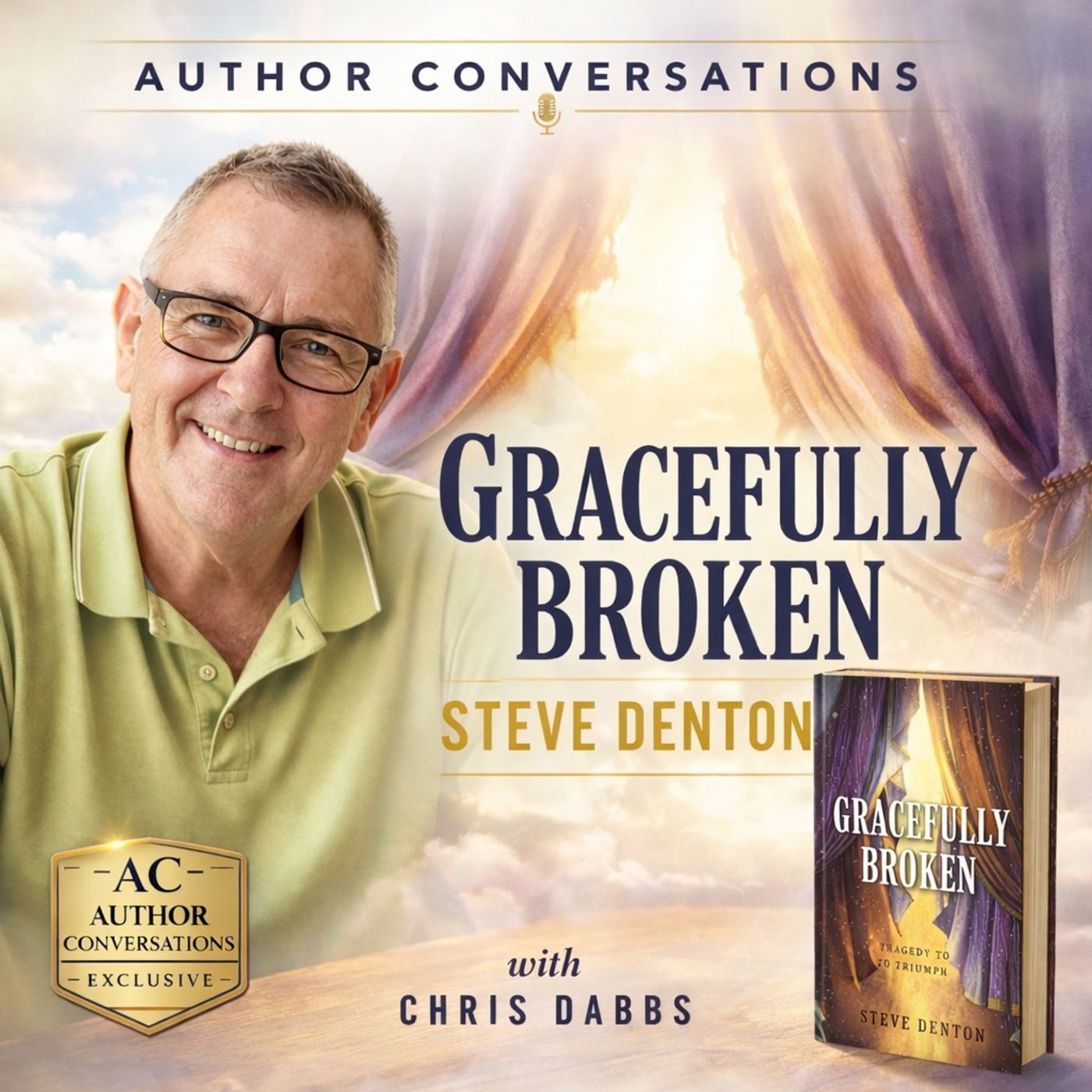
They discuss personal resilience, faith and the experiences that shaped Steve’s journey and writing.
A thoughtful conversation about overcoming challenges and finding meaning through difficult moments.
Steve discusses the challenges that tested his resilience, the role of faith in navigating difficult moments, and why stories of struggle often become the foundation for hope and growth. The conversation explores how adversity can lead to renewed purpose and how sharing honest experiences can encourage others facing similar situations.
This interview offers insight into the writing process, the themes behind the book, and the wider message Steve hopes readers will take from it.
Author Conversations is a professionally hosted interview series featuring writers, thinkers and experts sharing the stories behind their work.
Host: Chris Dabbs Broadcast journalist, presenter and podcast producer.
Become a supporter of this podcast: https://www.spreaker.com/podcast/author-conversations-with-chris-dabbs--6905413/support.
Every book has a story beyond its pages.
In Author Conversations, broadcast journalist, presenter and newsreader Chris Dabbs sits down with the writers behind some of today’s most fascinating books to uncover the research, experiences and ideas that never made it onto the printed page.
Featuring bestselling and emerging authors from around the world, each episode goes beyond the blurb to explore the real stories behind the writing.
From untold historical discoveries and groundbreaking scientific research to personal journeys, business insights, faith, true crime and the human experience, every conversation is designed to inform, challenge and inspire.
Drawing on more than two decades of professional interviewing across radio, television and digital journalism,
Chris creates thoughtful, in-depth conversations that give authors the time and space to tell the stories that matter most.
Whether you’re searching for your next great read, fascinated by the creative process or simply enjoy intelligent, long-form conversations, Author Conversations offers a unique opportunity to discover the people, ideas and experiences behind remarkable books.
Real authors. Real stories. Real conversations.
Well, hello Steve, thanks for joining us, it's going to be great to talk to you today. So first of all, the best thing to do is to tell everybody who you are really, I guess, and you know, a bit about your background. All right, okay, well I'm no one special. My story really, the way I'm on here, I suppose is because I wrote a book about my life, and that was that happened because I married a lady seven years ago now, and two months later she was diagnosed with the Asbestos cancer, whose name I can never remember, they gave her eight months to live, and sure enough she died like two weeks before our first anniversary.
When a friend of mine said you should write a book about your life, and it seemed to resonate with me there and then I went home that night, I started writing about my life, and I finished it in exactly two weeks on the day of our first anniversary, which all seems very kind of timely, should we say? Yeah. It's like predestined, isn't it? You would definitely use the sector. Great believer in predestination. So yes, predestination, providence, whatever word you want to throw with it. I am a Christian.
When I mean by that, I live in relationship to God, and I believe he directs my life, and indeed what has sprung from this as tragic as losing someone is, is birthed so much in my life. I've actually started doing my own podcast last week, so that came from writing this book as well. It's amazing where life can take you. Just open up that you don't expect, especially if you think of it in that way. Did you know that your wife was ill when you were married first? No. No, it came out of the blue then.
Oh, completely. She was fit and healthy. We don't expect these things, do we? It's a deep story. I mean, it's all laid out in my book, but as a Christian, I believe, everything that happens to me is happening for a reason, which really helped me. I went through the grief and cried my eyes out with them. We had eight months. No, and she was going. At first, we believed, I believe, certainly that God was going to heal her. I said, "Now this isn't the God I serve. He wouldn't do this to me. I've just married her."
However, I now understand it a lot better. What happened is what was meant to happen. I mean, we all have to die at some point. Along that journey, I think it was about two months before she died. It was a very powerful moment one morning. We were listening to an old preacher, David Porson, tell a story about someone. He was visiting that was dying and actually asked him, "Will you go home and pray and ask God if I'm going to die?" He went home and he said, "He felt God said to him, "Yes, I'm going to take her."
He said, "I didn't know how to go back and break the news to her." But when he did go back, he said, "God had already told her as well, so I didn't have to." At that moment, Chris, me and Angie felt this piece. The only way I can describe it, at that moment, I knew God wasn't a healer. He was going to take her and I just had to deal with it. By now, as I say, I understand it a lot more. I think that's the thing, isn't it? I was interviewing somebody yesterday who also has Christian beliefs in such a way.
It's one of those things you can't ask for a result to happen, can you? It's kind of like, if it's God's way, it's God's way, right? I've learnt this more and more in life. The Bible tells me that God's thoughts are not like my thoughts and His ways are not like my ways and thank goodness. Because as humans, we think we know what's right, we think we know what we're doing. I mean, I had also the plans with Angie to what we were going to do, once we were married, where we were going to live. As you do, you make your plans.
But obviously, I didn't know what God knows. He had a very different path for me in life, which is now coming to fruition. So, yeah. Which is a good thing, Steve. That's the way, I suppose, we have to. It's much better than that. It's much better than I feel. So, what does gracefully broken mean to you now, then? Is that a reference back to how you felt at the time being potentially broken? Or how does that help? Yes. It's a type of a song by a lady called Tasha Cobb, American Gospel singer, which always kind of resonate with me.
It's a beautiful song. But I never understood it in the way I understand it now. My life wasn't good to be honest when I married Angie. And what I mean by that is the way I was living wasn't good. I was living in disobedience to God. And I had been for a long time knowing what I was doing wasn't right. And that was, you know, the Bible also tells me that God disciplines those He loves. As any parent does for a child they love. And that was God beating me. You know, I met Angie for a reason. I went through that for a reason.
And it put me right back on track. I got the message. Can I put it that way? I got the message behind the punishment. And a little I grieved and it was awful. I lost her and you know, I wasn't just me who lost her, a daughter's did as well. But for me, what I took out of it was that. And it helped me understand, you know, death and the meaning of life really. And what it's led to is I keep saying is it's mind blowing for me personally, you know? It's mind blowing. It must be. It must be, you know, you've got to try and come to terms with the personal grief.
And then again, I guess knowing that that's not necessarily what you know, I can't imagine right how difficult that was. But surely, yeah, as you say, do you Christians help you through that? Yes. I mean, Chris, I'll tell you a story I found out because I was sharing this months later with some ladies in the church with my pastor. And it was, it happened during COVID. She actually died the week of lockdown, which made it even more bizarre for me. You know, I had trouble going to anyone's house. I had 10 people at a funeral.
That's all I was allowed. So I had to deal with all this. And, you know, I was going through the grief and everything as well. It was the most surreal kind of time for me going through that. Sorry, I forgot the piano was well. No, no, no, no, no. You'll come to it. Don't worry. This is what happens all the time. But, you know, this is what we do, right? We're just, we're talking about things. But, okay, let me ask you about your early years then in Cardiff and Birchgrove. Okay. Right. How did they kind of help you?
You know, what experiences do you see that really helped you to push forward using those? Do you see what it means? I've got nothing to complain about, Chris. My early years, my whole life growing up, I feel privileged. You know, I'm very mindful of what people go through in the world. I mean, how many charities have we got in Britain alone? And why have we got them? You know, there's so many problems that people go through. I'm actually involved in my wife, Foster's children. I've remarried since that's one of the amazing things.
And she wanted to go into fostering. Now, I'd never, I never saw that for me. I'm, I know, no, I've had kids. I'm done with all that. But sure enough, again, I feel like it was God's will and I went into it. So I'm involved in that. And I appreciate, man, some of these kids we've had through our care and our house, what they've been through. I've got nothing to moan about, you know? So those early years stood me in good stead. And I've learnt, you know, we used the word predestination earlier and I said it was providence.
I've learnt that God teaches us through life, summer and some of us are listening and some of us don't want to know. But really if you look back on your life, I believe we've all got gifts we've been given. In various shapes and forms, we're all good at something. It's in us, isn't it? To do something. And it's a matter of finding that niche in life that gives you purpose. And God in my life really, that's it. It's not a religion, like I say, it's a relationship. He shows me. If I'm listening, what I should be doing, I know I'm good.
I know I'm not good at it. And, you know, I've found those niches through being a Christian. So, but your whole life kind of shapes that. I'll give you one particular instance. As a six-year-old kid, I was an only child up to the age of 11 when my parents had my sister. But up to that age, I learned to amuse myself as an only child in Britain in the 1960s. OK? So I used to play subutieo. I don't know if you know the football game subutieo. I am used to... I get around that, I do. Right, yeah. So I played low to that.
And I used to keep fixtures and tables in a little booklet all doing it while I was six, seven years old. At the age of 30, I started running five aside leagues, doing exactly the same thing only on a massive scale in which I'd never dream what happened to me. Now, that's what I'm talking about. It's got kind of trains people in their youth or through their life for something they're going to do later on in life. And when you get there, you're fully equipped. You don't think you are, but you are.
You've been through all those experiences in life which enable you to perform your purpose. It's the most amazing thing. Yeah, I completely agree with you, Steve. I think that's absolutely the truth, isn't it? And the more authors I talk to, the more people I talk to. And the more experiences I have, I see that if people think that an experience is bad, for instance, or it's over or whatever, genuinely, I believe that they come back as you say. So you look at you, right? You did all of that when you were very young, you learnt to have it in it.
And then all of a sudden you've made a change to people's lives by being able to use those skills to help them to go on. Because five aside football or soccer for other listeners is something that people live for, don't they? These days, can I tell you when I started the Chris and this amazed me. I never played what we call parks football, the 11-a-side game. I never played that. For reasons I won't go into now. When I started the five aside, it was in the 90s in Cardiff. And I put a little piece in the local press, the South Wales Echo saying I was going to do it.
The next day I had 40 phone calls in relation. What are you doing? I want to join that kind of thing. I found out at that point because I really didn't know what I was doing. I was making up and so I was going along. I then had a phone call from the Welsh FA who also wanted to know who I was and what I was doing. They did it. Now these guys, without going into it again in debt, think they own football and that I had to do it through them. And I was saying, no, no, I'm just working for a charity and I was at the time just having some fun.
I was doing it with the homeless of Cardiff at the time. There were five places in Cardiff that dealt with homeless people and they were all getting a team together and we were playing each other so it was wonderful but it progressed beyond that. But there was a niche that I knew nothing about. There was no five aside football, organized at the time. And I started that. And again, I see God knew that. I didn't and he led me to that because he'd already trained me for that. It's the most amazing.
It's an example of what I was talking about earlier with Providence if you like, you know? And your skills taken you somewhere and fulfilling a purpose within them. So yeah, powerful stuff. It is powerful. It is powerful. I mean, there's no doubt. I think that that's an interesting thing. I mean, most people, many people go through hardship and struggle to move forward such as the homeless people that you're working with perhaps. How did you sort of change the way that you thought about things when you were going through your hardest times to enable you to move forward, to be able to re-marry, to be able to do what you did and cope through COVID because there must have been really lonely times have gone through that as well.
Yes, it's a good point. Well, if I had to sum it up in the nutshell, it's again, I'm in relationship with the creator of all things. And when you have that relationship, you know, you hear people saying, oh God told me this God told me that I'm not one of them, but I read the Bible and that is God's Word, that is God's voice. And you know, if you read it in a personal way with meditation on what it's saying to you, it speaks loudly and tells you how to think. In fact, it transforms the way you think because we grow up in this world and our thinking is very much done for us, isn't it?
And I believe, you know, with kind of taught how you should think and how you should do, but when you become a Christian, you have to completely and utterly change all that and the Bible tells you that. It says to be transformed by the renewing of your mind. That's the way it puts it. And so you start thinking and seeing life a totally different way. So the comfort for me when Angie died was knowing, first of all, where she was going. I didn't have any doubts or questions because she was also became a Christian in the time I met her.
So I had peace in my heart knowing that although she's died and I've lost her, I'll see you again one day and I'm confident of that. Now, you know, I didn't have that before being a Christian because I didn't understand death or know where death led because we don't do it. We don't know what death is as it occurs on mankind and it's something most of us find really hard to deal with and I get that. You know, it's an awful experience to go through. I'd been through it, obviously, firsthand, but having an understanding of it certainly helps and having that peace in your life certainly helps.
So that's my story. That's my way of, I think we all deal with grief differently, don't we? But for me, that's what helped me through that time. And as you say, I didn't have a lot of human support because I couldn't go in their houses and my mother, in fact, now says to me how terrible she feels about that. She said, "I can't believe we didn't let you in." I know. Israel, yeah. Yeah, they were different times, weren't they? We really did think differently. Oh, yeah, absolutely. Well, I tell you what, I mean, if you think about it and you think about all of these, the changes that you went through and you think about all those struggles and the way that your Christianity helps you, what do you hope that people get out of your life?
You know, what are they reading? When they pick up your book, are they reading it to be helped or are they reading it for a story or what do you think? My goodness. You know, I'm not very good at that. I just wrote it and what came out came out, like I said, you know, it took me two weeks and you can actually read it in about three and a half hours. So it's not a long affair for a life, but it's full of my Tom Foulery as a youngster. I have lived a great life. You know, I've been very into music and as youngsters, we used to follow bands around the country recklessly at times with no thought of where we were going to sleep that night and there was no planning to it.
It was just a desire to enjoy life and life to the full, if you like. So it's full of those kind of experiences and then things that I was led to like the football I've just referenced. You know, it pans out like that just rough areas of my life and hopefully that's quite entertaining. There's a few funny stories in it and what have you, but really at the end and again, this is a powerful thing when I meet Angie in the book, it becomes about her really and what she was going through. I mean, how many people go through cancer, Chris these days or any disease and a facing death and how do you face that as a person?
I didn't have to face death myself. I had to watch her face it and little did I know at the time she was keeping the journal. She didn't tell me. She was going upstairs every night for a quiet half an hour or hour before I came up and she was writing down stuff that was going on in a mind and I only found it when she died and it blew me away to see what she'd written and I've actually used it in my book so the narrative at the end becomes her narrative. Now if that isn't helpful to people then, you know, I don't know what would be because it's her personal, it's powerful stuff.
You know Chris, it's really what she was feeling and how she was dealing with having to leave her children and what she hoped for her children and all stuff like that and it's really a great blessing to have that at the end. So that's a rough guide of what the book's about. Wow. Okay. I see what you mean by that case. You know, I think that listeners, you should listen to, you should watch the, I mean, read it either. I mean, the idea of you weaving in the journal parts of Angie's story as well and I guess how it affected you at the same time, right?
And then sort of moving around to that. What sort of things, if I may ask? What sort of things did she say? I mean, was it all sort of, you know, very sad or was she happy and joyous? But I mean, yeah, but yeah, both. I do know what you mean, yeah. I mean, the happy and the sad element when you read is the fact she's leaving and she knows she's leaving this earth and she's leaving behind two beautiful daughters, who one of whom would just have a second child. So she'd never see him grow up. I mean, this kid is now six years old, you know, and she's seen none of his life up to then she was leaving her other granddaughter, who was about seven or eight at the time, I think.
So she's documenting her hopes for what they happens to them. I remember us saying, I hope their parents get married and, you know, stuff like that. To be honest, I haven't read it for a while, Chris, so I can't remember exactly everything she wrote, but to get, you know, a personal insight into a human like that is a wonderful blessing. And there's the sad part of it, sorry, the happy part of it where she is reflecting on the great time she's had in life, you know. I remember she couldn't get out of the house in the end because of breathing that was shutting down and all that kind of stuff.
So we were confined to the bedroom for the last kind of two, three weeks of her being alive. She couldn't even get downstairs. So it was literally confined to the bathroom and bedroom upstairs. And she hadn't been baptized. And suddenly she wanted to be, but it was too late to do it out there in public. So I asked my pastor to come around and he was actually a very good friend of mine. And he came around and baptized her in the bath. And it was the most powerful thing. And he said, we took communion in the bedroom first.
And her daughters were with us and a granddaughter. And he said that the blessings of life are your children. And he said, they're here with you now. And that run true with me, Anagy. They were the blessings of her life because she was actually abused as when she was young by her father. So she knew what a terrible life kids could have if the parents didn't perform as such, if I can word it like that. And she never wanted that for her children. They were her blessings. She loved them dearly. She worked hard to give them a life she didn't have as a child.
And that's a lot of what I admire about you. You know that resilience to get through what she'd been through and be a better person for it, rather than blaming it for being as some people fall apart, who stuff like that. And they're not able to get their lives together from it, you know? But Anji was. And that's reflected in this as well. And I think that's a wonderful message for anyone going through troubles and what have you. And then you end up fostering. Exactly. No, I don't want to. But then Paul asked me about it.
Why are you doing this? I said, well, if I'm honest with you, I'd rather not be. My life would be a lot easier if I didn't. But you know, we've got things to give. Like I said, I feel privileged to life I've had. If I can give back, then great, you know, and whatever capacity that is, then it's a duty on me to do that, you know? Well, listen, I think that that's amazing. I think some people call that paying it forward, you know, all around the world. That sort of thing, which is great, you know, we're running out of time, obviously, unfortunately, it's always the same.
We get. I know. I know. I know. So tell us about the book. Have you had any great comments? All these sorts of things were, you know, listens, what are you hear? Because I know that sounds great. And, you know, I'd like to know a bit more about the bands that you followed, actually. That's something I always wanted to do. But I did. I was a punk rocker. So that gives you an idea of the bands I was going to see. More post-punk. So bands I've seen loads of times in my life. Back then, we're like Killing Joke, Bauer House.
That kind of era of music, you know, I've since broadened as I've got older. I'm going to a jazz club tonight, so that gives you some idea of the difference. Well, I've got it. But, yeah, back then gigs were everything for me. And people of my age, I'm 60-ish. I won't get my full age away. I'm 60-ish. People of my age will recognize the kind of life back then in the sort of 80s, you know, the early 80s, especially where, you know, we're going to be in the 80s, you know, we all look for something to belong to, don't we?
And back then, there were so many subcultures of music you could choose to belong to. I mean, I chose punk, but there were mods. There were rockers. There were, you know, modern romantics. There was scar. There was skinheads. There were all these kind of brands of music with a choice who to follow in. And they gave kind of purpose to your life. And it made you feel like you were belonging to something and so on. In fact, I often say that the stepping stones to me become the Christian were punk rock and Bob Marley.
- Hang on a second. - Yeah. - Marley. But Bob Marley, when I got into him, little did I realize how much he was singing scripture. And I was listening to him, God, what are you singing? Make so much sense to me. I wish I could live like that. I wish I could be like that. I think anyone's into Bob Marley listens to what he's singing about because he's a great man of God. And what are you singing about really resonates with the world, peace and love and unity and all those things we all say we want, right?
You all say we want those things, but living them is a different ballgame, isn't it? But yeah, that was a stepping stone for me to Christianity. - Oh, wow. That's the first time I've heard that, you know, well, I've got to say, but it's a great thing to kind of end on, I think. So Steve, tell us about the, to give us the title of your book, where everyone can go and get it. Are you doing an audio book? You know, how's that working? - Yeah, it's all out there, Chris. I've done an audio book. The books out there on about 40 platforms, so Amazon and all the sort of big book companies that the audio books out there in Amazon or audible is it?
I'm not very clued up. I'm trying to learn about all these things, right? So it's all out. It's called Gracefully Broken, like I said, it's a three hour read, three and half hour read. And so I saw someone on social media to say, can you recommend a book I can't put down? So I recommended mine saying, you won't put it down because you can read it in three hours. And hopefully it's like watching the TV program, right? You watch it and so forth. You move on to the next one. - Sure. Yeah. Excellent.
Well, listen, Steve Denton, thank you very much for joining us today. It's going to be fantastic. And I hope that we get to speak again soon. Are you planning to write any more books? - No, I was, but this is, as I said, Chris, it sent my life on the different course. I've just started doing actually his podcast. That's what it's led to. So I'm out there now on YouTube at the moment. The channel's called Word Thought Deed. And I've done my first one, I'm doing my second one this Sunday. I know some great, I've met some great people and great stories.
And that's the sort of what I'm doing in podcast. - Excellent. So what was the story at the name again, sorry? - Word Thought Deed. - Word Thought Deed on YouTube, yeah. - Excellent. Well, everyone, go and listen to that as well. Steve Denton, thank you very much for joining us. It has been a pleasure. And well, hopefully we'll speak again as I say. Thanks so much. - Thanks, Chris. Bye, no.
 Apple Podcasts
 Castbox
 Castro
 Goodpods
 Moon FM
 Overcast
 Pocket Casts
 Podbean
 Podcast Addict
 Podcast Republic
 Spotify
 YouTube