Trauma Doesn’t End With You: You Need to Know About Your Roots
✔ What inherited trauma really is
✔ How family secrets affect future generations
✔ Why guilt and shame can echo through families
✔ The surprising impact of DNA discoveries
✔ How hypnotherapy works with unconscious patterns
✔ Why healthy boundaries are essential for healing
✔ Practical ways to break destructive family cycles
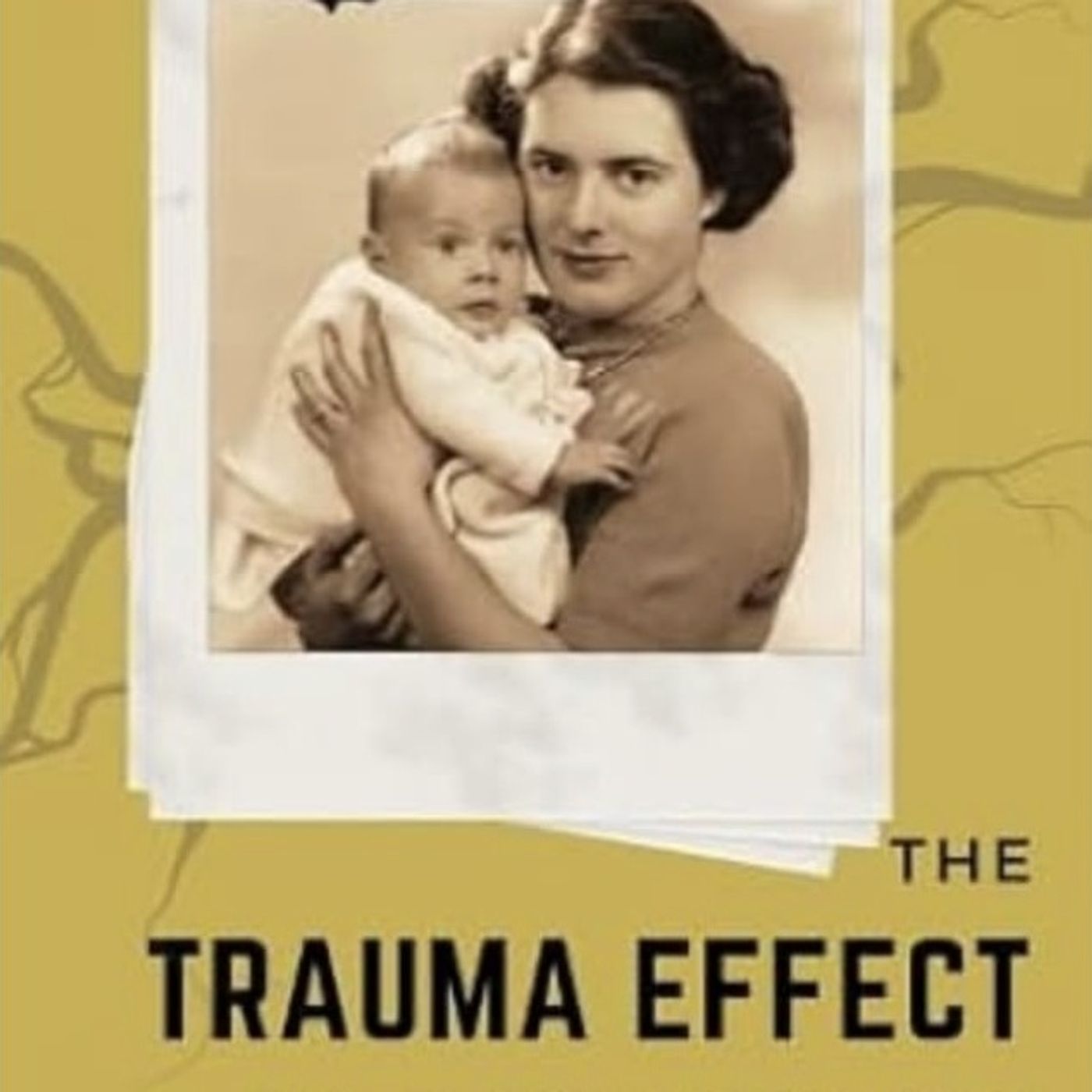
One of the most compelling parts of the discussion centres on a mysterious family photograph that led Zetta on a journey to uncover a hidden story that had influenced generations of her family.
Whether you’re interested in psychology, mental health, family history, personal development or emotional healing, this conversation offers thought-provoking insights into the stories we inherit and how we can rewrite them.
📚 The Trauma Effect: Exploring and Resolving Inherited Trauma by Zetta Thomelin
🌐 Learn more: https://www.zettathomelin.com/
🎙️ Subscribe for more Author Conversations interviews with authors, researchers and experts.
This is a fascinating conversation about family history, psychology, healing and understanding the stories we carry.
00:00 Introduction
01:15 What Is Inherited Trauma?
08:30 How Trauma Passes Through Families
15:20 The Family Photograph That Changed Everything
23:40 Why Family Secrets Matter
32:15 DNA Discoveries and Identity
42:45 How Hypnotherapy Creates Change
54:00 Rebuilding Boundaries and Self-Worth
01:02:30 What Readers Can Learn From The Trauma Effect
01:07:00 Final Thoughts
Become a supporter of this podcast: https://www.spreaker.com/podcast/author-conversations-with-chris-dabbs--6905413/support.
Every book has a story beyond its pages.
In Author Conversations, broadcast journalist, presenter and newsreader Chris Dabbs sits down with the writers behind some of today’s most fascinating books to uncover the research, experiences and ideas that never made it onto the printed page.
Featuring bestselling and emerging authors from around the world, each episode goes beyond the blurb to explore the real stories behind the writing.
From untold historical discoveries and groundbreaking scientific research to personal journeys, business insights, faith, true crime and the human experience, every conversation is designed to inform, challenge and inspire.
Drawing on more than two decades of professional interviewing across radio, television and digital journalism,
Chris creates thoughtful, in-depth conversations that give authors the time and space to tell the stories that matter most.
Whether you’re searching for your next great read, fascinated by the creative process or simply enjoy intelligent, long-form conversations, Author Conversations offers a unique opportunity to discover the people, ideas and experiences behind remarkable books.
Real authors. Real stories. Real conversations.
Hello and welcome to author conversations. I'm Chris Dabbs and today I'm joined by author, therapist and hypnotherapy expert Zeta Thomelin to discuss her book The Trauma Effect, exploring and resolving inherited trauma. Now, in this book, which sounds fascinating, Zetta explores the idea that trauma doesn't simply disappear with time, which is kind of what we all hope, right? But it can echo through families and across generations, shaping emotions, behaviors, fears, and you know what, even our sense of identity.
So, drawing on both professional experience and deeply personal family history, the book kind of examines inherited trauma, secrecy within families, memory, illness, shame, and the stories we carry, often without fully realising it. And I think having looked at some of this book, I'm pretty guilty of some of this, I think. Now, Zeta spent many years working in hypnotherapy and therapeutic practice, and currently serves as a chair of the British Association of Therapeutic Hypnotists alongside a number of other leading roles within the field.
So Zeta, you know what you're talking about here, don't you? So, Zeta, thank you for joining me. How are you today? I'm good. Thank you, Chris, and thank you for having me on today to talk about my work. No problem at all. I'm really looking forward to this. I think it's going to be fascinating. So, okay, so for people who hear the phrase "inherited trauma" for the first time, I think we need to unpack this really. I mean, what does that actually mean? Well, when we grow up in a family, we learn about the world from the family we've gone into.
We like a blank canvas, and they give us information on map to navigate reality. That family, things were happened to it, and that's what we've formed. From the kind of behavioural patterns and responses, so it may be an event has happened to generations back, but it's informed the behaviours of those parents that then they pass down the line, and there comes a point where you need to make those stop. So it can be things like guilt or blame or shame. It can even be attitudes to health. Because I did something wrong.
I carried guilt for something that's happened in my family. I didn't get it right, and therefore I deserve to be ill. And then the next generation, if I get something wrong, I deserve to be ill. Or guilt not being there for somebody who perhaps commits suicide. When a family becomes very overprotective and that passes down the line, it's interesting that we can absorb such serious things through just absorbing information as we grow up. I deserve, I've been bad, I deserve to be punished. But guilt within a family, there are so many different traumas that can affect a family.
It could be suicides, obviously one of the most common ones, sad that that is to say. But there are families around the world where someone has been murdered or raped, or there's the other side, or being the perpetrator of a crime. And in your family, someone has been convicted for murder, for example. So you're going to have a huge shame in that family that you're going to perhaps carry from generation to generation because you've learned that behaviour from your parents, and then it's passed on to you, or from your grandparents to your parents, deep shame, or moving towards blame very quickly in a form of self-protection.
So there are so many ways in which we can learn behaviour and then pass it on. Poor boundaries, not protecting ourselves properly. Or caring for a wounded parent, so if something's happened to a parent, you become their carer. I mean, I'm sure you've encountered this perhaps in your world, that if there's a parent who's physically ill or mentally ill or dealing with some past tragedy, they need looking after from their child, so the role changes, so the child is parenting the parent. And that creates so many problems within those future relationships because it's too close, you know, that there's no separation and they become kind of melded together with the parent.
And then you learn really poor boundaries moving forward in life and then you teach that to your own children at those poor boundaries. So it can go back a long way, or it could be something that just happened in your previous generation, as in my family, I found I was working a lot with family, with an individual trauma within that family, someone where it's happened to them. And then I started to think about the bigger picture, or what about if it's happened in your family and then what about if it happened a long time ago, how does that work?
And then I thought about it for tragedy in my own family that happened in my father's generation before I was born. And I suddenly thought, "God, I wonder if that affected his behaviour." And as I began to unpick it, and he was a great man, I dored my father, but I was far too close to him because I sensed the wound in him, the hurt in him. But it wasn't until I kind of hit Sifty, I started thinking, "Goodness could this have affected his behaviour and all the story in my family, how because he was a wounded hurt man, we all had to do what that wanted.
We had to go along with his needs and his needs came first because he was wounded, but it all happened before I was born, but I had to deal with that. And then I found it was affecting my close personal relationships because I didn't have good boundaries and I would rush to look after everybody. I became a therapist a bit later than some people in life, I was 40 at that point. But I realised I had in my personal life been rescuing people because that's where I learnt to do as a child, I rescued my dad.
So I needed to rescue all my partners, had problems, I had to rescue them and my friends needed rescuing. And now I reach the point where I don't want to be rescuing all these people all the time, what I'm going to do is I'm going to do it professionally and no longer do it personally because I've learned poor boundaries, I need to relearn boundaries, I need to start to rebuild. And so I thought, okay, so all this is happening to me, it must be happening to other people too. And then I started to talk more as I became moved further into the world of therapy, talking more to people about their own experiences.
And I think there's so many experiences or inherited trauma, you suddenly saw it straight away. I mean, I've had clients who are grandchildren, for example, of Holocaust survivors or, you know, and you see, you think, oh, how can it be effective? Then it can, it does, you know, Holocaust, grandchildren of Holocaust survivors are 300% more likely to need psychological support, that I mean, more populous. So there's your initial evidence. And it's this evidence that made people start to look at, okay, what's going on here?
Is something being passed on? There's an excellent book called Generation R to Generation by a woman called Wanderer Cohen and she is the granddaughter of a Holocaust survivor. And she realized her mother's behavior was affecting her and that her behavior then was affecting her own children as they were growing up and she needed to make it stop. For example, keeping safe, not drawing attention to yourself because if you're in a concentration camp, you don't want to be seen, you don't want to draw attention to yourself.
So you mustn't do anything to draw attention to yourself. And so the mother passed this onto the daughter and the daughter was passing men that on to her children. So these, these interesting subtle things, you wouldn't think possible that get passed through generations. So it's a vast topic. There is so many ways in which our behaviors can be informed by our predecessor. I mean, they are anyway. But if there's a big trauma in there, then those complications are much, much bigger, I guess. Yeah, absolutely.
Actually, when you think about it and you look at all of this, I can see what you mean. I mean, when you say about a family, you know, that has a say a murderer or even if it's just just recently happened for instance, you know, I often think about that when I'm, you know, obviously on the news, you hear this reasonably often, right? And then the families have to deal with that sort of thing. And it's not something that one thinks about normally, is it? No, but once you do, you see the ramifications.
And how, for example, if someone's been murdered in the family, you've got to stay safe. You've got how do we stay safe? The world is an unsafe place. So if you learn that, if you're a child in that family, you're going to pass that on to your own children. And we learn that safety or fear from our family environment. And it's fascinating how different families are. I think when we grow up in a family, where's you, everyone's the same? But they're not. And that leads to a lot of conflict in human relationships in one family.
Anger has expressed a lot. So if someone screams and shouts, the person in that family gets always no big deal, you know, they're just letting off steam. But if that person then marries someone where there was never anger shown that one shout and it's all gosh, this means our relationships about to end and they then react differently. You know, all these learnings coming from families that may be traceable back to atroma, or you know, learned family patterns and how we react to them. So we have to unpick what's going on and understand it.
And so often now I find within someone I'm working with that there's some story that goes back a bit. And sometimes it like to three or four sessions and suddenly someone also, well, yes, of course, my grandfather did commit suicide or oh, well, you know, but it's normalised because well, it happened in my family, didn't it? So it's just normal. But the answer, hang on, that's big, that's big stuff. How did that affect your parent or how did that? How do you think that might have informed their behaviour?
Can you see any way in which that might be affecting how you feel right now when you're on picket, it's fascinating. Yeah, totally. You know, I'm really thinking about all these things that have happened in my life. And now I'm thinking about how I've brought up my children and you know, and what how they're reacting to everything. But you know, it's interesting. And you mentioned grandparents. So let's go back to that because the opening chapter centers around what they've photographed beside your grandmother's bed.
Yeah. So what did that image become such a powerful starting point for the book? Well, because we weren't allowed to talk about it. And this leads me on to what makes it more likely for a trauma to become a problem in a family and its secrecy. Because if you keep secrets, you're left guessing what, what, what's this about? And it feels very unsafe. Secreties unsafe. There's a one called Gabrielle Schwab who wrote a book called haunting legacies about how a trauma in a family's like a haunting, especially if you're not allowed to talk about it.
So it's always there. So for me, there was a picture of a woman holding a baby. I knew she had been my father's sister. So actually, this woman is my aunt, but she died before I was born. And that child is my cousin, but they died before I was born. And this picture just was, was like a strong presence because these people, and we weren't allowed to talk about their death. We didn't talk about it. It was a secret. And we just never allowed to look into it. And my father made me promise never to look into the story of the death of my aunt and her three children.
I promised I broke. And I felt sometimes we can be induced to make a promise that isn't realistic or fair. Because it did affect me. And I wanted to know the story. And I wanted to know what had happened to them and why it was such a big secret. And I was quite frightened by this secret. What was so terrible we can't talk about it. And so it led to this journey. I mean, initially, for me, I really wanted to find out more because I started to develop some health symptoms, head tremor, and my father had Parkinson's.
And my grandmother had had Parkinson's. And I had realized that as a, even as a quite younger person, I had put that down to it's to do with the trauma. So they shook because of the trauma that that's what I had as a child, a young person had decided. It's odd that the thoughts we made, but that was the link I made. The shaking is because of that picture, this trauma that we're not allowed to talk about. Then when I started to have a head tremor, I thought, my goodness, I'm I picking up and carrying this trauma on because they're dead now.
Have I just picked this up? And am I am I carrying on this trauma? I need to unpack it and learn about it. So it started, I mean, the book started as I put it journey for myself to find out the story properly, read the inquest reports, what happened, and then kind of imagine in a sort of novelistic way, what was going on at the time and the people and and think about the impacts of it. And then to think about, okay, how did this affect me? And how can I heal myself now? Get blame, shame, all the things that were coming after that, dealing with secrecy, identity, all those factors that needed to be dealt with.
And of course, straight away, I find more and more clients coming to me with similar or of traumas in their family. And they need the same sort of help and a mentor of mine said to me, you know, read about what I wrote. I wrote to get it out of my system, I guess. And she read it, she said, this is this is a book, this can help other people. And so, so it did, it did, got out there. And I've had a lot of feedback from people say, I read this and it spoke to me because I suddenly realized what was going on in my family.
It may not be such a big trauma has happened in my own family, but there are always things going on in families and almost all families have secrets. That's what I was going to ask actually, I mean, what we took about skeletons in the family cupboard, right? Yes. So, these such a common term, isn't it? We use it all the time. And I used to think, no, surely not, surely not, but as I become older, obviously I've become across families who do have skeletons. And I think that that one, you know, your example there, that photograph that you just can't discuss, yet the photograph is there, some of shrine or memory, must have been reading.
I mean, as a child, you probably didn't really think about it, but as you get older, you start to question it. And the thing is, we're learning things as a child that we don't know we're learning. It's unconscious learning. It's not conscious learning, which is the human nature, right? Which is the human nature, right? Yeah, yeah. And so, you know, I had a learning that you've got to take care of everybody else first. You come second because something terrible will happen if you don't. That was the learning.
I didn't know what a terrible thing might be, but I had to just make sure everyone's okay. And so I always put myself last and I, you know, I had to do a lot of work to bring together. I have some rights in this situation. So you have these kind of learnings. And that's one of the most common things I see in a family's where there's been some sort of tragedy, you know, for example, a mother being raped or something like that. And then the chance has to take care of the mother and always will feel that responsibility right through their life, you know, this switch between parents, you know, roles in families.
And obviously when there's a physical problem, like parents, if it's very sick, you know, that those roles change. If they happen when you're quite young, that will affect your behaviors through your life, you know, we often end up caring for a parent in an older age, but that's kind of a bit different when you're doing it young is being imprinted into your pattern, you know, your behavior patterns. And you get, you know, as I mentioned, it boundaries become a problem that it blurs the eye mentality or we it's all about we and keeping us safe, you know, and it can be really problematic, but it moves beyond the family.
And in that you think about whole cultures that can be affected by traumatic events. And there's been a lot of work coming out of Germany to do with the Second World War and the guilt Germans feel around the war. There's a book by a woman called Nora Krug. It's called belonging in English Heimat in the original German. How do I belong to these people who did this terrible thing? And how do we respond to that? And there is still in current generations, a feeling of guilt. But the people now they want to live.
It was their grandparents, even great grandparents, who did these terrible things. But they're still in caring guilt and maybe some hesitation about saying one on German. And it is interesting. So a whole culture can carry guilt and shame for something that their ancestors did. Or of us, rehearsing it round if you are the victim, if you're from a culture that was colonised for generations. I mean, one of the things I think comes out of that often is secrecy. My mother's family is Irish. I noticed there's a lot of stuff around secrecy in the family.
I thought this makes sense because you had to stay safe. You're governed by an opt-upying people. If you say the wrong thing, you could end up in jail or shot. So you're secretive. And you don't know who to trust. Trust is hard, isn't it? So if you trust your neighbour and then they tell them you did this or that, then you're at risk. So trust then becomes something that's hard to do. And these things can be passed down generations. And people don't even know why we keep secrets. Or we all know, don't tell the neighbours or whatever.
It's just ingrained. Isn't that a pattern? We just follow the pattern. It's what we do. It's what we do in our family. It's quite right. If you think about the Shane side of things and you think about where we are with technology and say ancestry, that brings up all sorts of things quite often, I think, when people just, they may be doing some genealogy or whatever genealogy. Anyway, they could be doing that and they upload their DNA to somewhere or other. And then it opens up Pandora's box of all sorts of things going on.
And again, that's happened in my in-laws family. Yeah. But okay, so I think we could talk a lot about all the causes and everything else, which is great, of course. But I think that's another subject or another time. But let's talk about the hypnotherapy then. So you've said that hypnotherapy helped you personally to deal with all of this before you trained professionally. Great. So what convinced you really, I guess, that you know, that the mind could generally influence well-being and that you could change, I'm guessing here, change your mindset or something like that.
Well, how does that work? Well, that programming is going into our unconscious. So we don't decide it. It's there. We learned it going up. And for example, our stress response is an unconscious response. We learn what to be afraid of. And then the alarm system goes off. And I see a lot of people with a full-sea alarm system. So you might go one of the prime examples you grew up in a household. And in one household, someone sees a spider and they scream at the other household that pick it up with a piece of paper and cart and take it out.
So one family would learn that's very scary thing. Another family that's nothing to be afraid of. But it's just a learning. So what we've learned, we can unlearn, we can change. I mean, on very, but now all simplistic level, we all used to believe in for the Christmas. But we don't, as an adult, we unlearn that. We've, oh, no, that's not true or the two-story or whatever it is. We acquire new information and we change our belief systems. So in hypnotherapy, we're working with the unconscious mind.
And because of that, we can get through to the full-sea wiring and put in new new suggestions because we're all responsive to suggestion where the positive or negative. I mean, this is whether placebo effect and the no-cebo, the opposite effect can come in. So you've got both of those impacts. So we respond to suggestions. If someone says to you, oh god, didn't you see it while I was like, look, it rough. Suddenly, you know, but sometimes it's like, you're all great today. I said, yeah, I feel pretty good.
You know, we're responding to that. And obviously on much, much deeper levels. So with hypnotherapy, we work metaphor and suggestion with the unconscious to make those subtle changes. So the mind has that urecha moment of, well, right, yes, of course, this isn't helping me. Is it this, this way of doing things isn't helping me. So we want to build a strong sense of self-self-sensualisation. Perhaps with one of the examples we've talked about getting too close to appearance and looking after them, you need to separate that.
And there are methods we can use something like cutting the ties where you visualize you're connected with a cord and you cut that cord to that person. It doesn't change your relationship with them, but it reduces that emotional intensity. So you can function in a more self-actualised way. So building up ideas about boundaries, one of the exercises that's in the trauma effect is about boundaries where you visualize being on a beach and you get a piece of drift, would you need to draw a small circle and that's your circle and then you draw bigger circles getting bigger and bigger around that central circle.
You put yourself in the central circle and then you're sewing people their places in those other circles so the people closest to you are in the nearest one and then you move them further around. But you're making sure you've got that boundary around you. Nobody has a right to be in your circle. You've got your boundary, but then there are people who are closer and further away that have more and more right to a piece of you so to speak. So you can build your protection and if you're going into a situation where you might feel a bit threatened, make sure yes, I've got my I'm in my circle, I'm safe.
And these are sound quite simplistic, but with the unconscious mind, it really responds to these kinds of suggestions and makes change. I teach hypnotherapy as well as being a practitioner and a recipient and it never ceases to amaze me the changes we can make as someone will come into me quite broken or really distressed and eventually they're walking out standing tall and feeling strong again. And you're just working with those unconscious patterns, those unconscious learnings laid down in their family or also if you're taught to be afraid, for example, growing up, be careful, be careful, be careful.
And then certain life events happen. The are a bit negative. You will go towards that negative bias to reinforce your existing belief systems because we have something called cognitive bias. So you don't want to be in wrong. So you'll look for information to reinforce your learning, which is maybe the world is a very scary place. I'm not safe and you'll keep reinforcing that rather than looking at 999 times, you were safe, you focus on the one time you want. And we're working to get that understanding in the unconscious, that time you fell down the stairs was once but all the other times you've been quite safe.
So we need the unconscious to understand that and shift the emphasis, which we can do. It's worrying, it's learning and what we learn we can learn. We learned to and to was for by saying it many, many times. So we're changing the learning. Exactly. Which is again quite amazing really. I mean, I suppose as a hypnotherapist you've got some problems to overcome in terms when someone thinks about hypnotherapically and they probably are going to think about theatrical hypnotherapies. Stage hypnosis. Yes.
Stage hypnosis. Exactly. That's the first go to think of. But they're having said that. Obviously this is very different process, isn't it? It is. And one of cooperation and trust and rapport and safety. And sometimes some of us see, you're going to make me run up down to the check in and say, "Rone if you want to." Because we can't do these things we don't want to do, you know, with stage hypnosis. You're tapping into someone's design maybe to be central attention or whatever. You're working with a desire in that.
We can't make people do things we don't, they don't want to do. And if someone's coming to me, they're put it to, obviously they want to change. But if they want to come and resist that change, that's fine. But it's a bit of wasted of their time and mine. But no, it is a very different thing. And I think because people, there's a lot more recognition for therapy, you know, the law started medicine, have a therapy division, which I often attend lectures for. And it's getting so much more credibility because we're kind of moving away from that stature, and I see a few.
And people are desperate for change. And when we're getting straight into the unconscious, we are fast tracking that change because we've got the single, the critical faculty, which we need to get around to be able to affect change. So I think we can do things much more quickly when we're going straight into where the problem lies. I can reason, on a very simplistic, I can reason with the smoker that there's cyanide in that cigarette. And they say, "consciously, yeah, I know that." But you're still smoking it.
But if I gave you a drink with cyanide in it, would you drink it? Oh no. So I can rationalise with that conscious mind for hours, but I'm not dealing where the problem is. It's the unconscious that does that automatic reach for the cigarette. I don't work much with things like that anymore, but that's, you know, gives a very obvious sign that we will be very illogical in our conscious processing. Oh, sorry, unconscious processing. And not in our conscious processing. Our conscious mind knows what's bad for it's all that a partner that's beating us up.
It's not good, but it's the unconscious that's keeping us there because it's the recorded pattern. You know, it's the pattern that's laid down and we need to get into that pattern to re-record over it to make an effect change. And it excites me and thrills me every day to see the changes people make. I'm not doing those for them. They're doing it. I'm just like the swimming coach on the side showing them what to do. Yes, a good analogy, actually. And they're finding their way to their recovery. And I've seen incredible change from people who've had really serious trauma in their lives, or family trauma.
You know, the number of families, I guess I only see the dark side, don't I? Because it's the people with problems that aren't seeing. But it's huge number of families that are carrying trauma. Really quite shocking. And if you go back far enough, I guess there's might be something. And as you say with the DNA, or finding more about your family, you know, you might find it's not what you think it is. I mean, that was my second shot, my and it'll follow up to trauma effect called genes down my because I did a DNA test and found out I had a half-simply might didn't know about.
And so here we've got another story I've got to think about. And that affects your identity and everything you think about your family. And the thing is one of the big new traumas that's coming up because so many people do a DNA test without thinking, you know, you need to think, do I really want to know? Because there could be something I don't want to know in there. But there's not much of a discussion around or only much in the way of disclaiming that so that people realize what they're actually might be finding out if they do that.
And as you said, you've had it in your own your own area of acquaintance. And now, you know, again, it's another thing that comes through my door regularly. As people trying to deal with being the child and finding out they're not who they thought they were or finding out that there's someone in that they've got a half-simpling or, you know, then their sibling isn't their full sibling, all this sort of thing. It has an emotional toll on people, you know, it really does. And particularly those that find out that their parent isn't their parent.
I mean, their whole identity shifts. And that our identity is our foundation stone, isn't it? It's what gives us, we build this image of ourselves that takes us into the world. It's what differentiates you from me, my sense of identity and yours. And if one piece of that's taken away, that's very destabilising. And you've got to reinvent yourself and think about what are the, what does it mean to be you? What are the fundamental things about being you? And to me, also, see, this is the thing. So let's have a look at that then.
Let's dive a bit more into it because I'm sure if you think about it a bit more really, really sit there and think about what happens when that happens in the family. I mean, we've had, you've had it. Okay, so, and I've had it in a kind of, as I say, it was an in-laws sort of situation. So it wasn't directly. I avoid doing anything like that to be clear. I always have people saying, "Oh, you should put your DNA on there. You're kidding. No chance." Because I don't want to know. Right. Why would, why would I do that?
Anyway, but other people too. But what about people who, who do want to deal with this news now, this new industry that's done this to them? As it were, how can you help them to really unpack everything and relearn their own sense of identity then? Yeah. I mean, it is looking, I mean, firstly, we need to pay back what does identity mean because you're more than your parents, your name. I mean, come with identities. The first thing is our names. It's a very first stage of identity. Our first name and then potentially our surname coming from a parent.
And that, if that gets affected, then that's our absolute foundation style, isn't it? But it's building up a sense that our identity is so much more than our ancestry and where we come from. And building up what are your core strengths, seeing yourself as an individual that goes far beyond that family DNA story. I mean, that's the background. But you're so much more than that. We become more than our blueprint. And we know that even from a genetic perspective, because genes, we can change our genetic make-up through, through epigenetics.
So, so it doesn't need to be as fundamental as we make it. But also, so it's looking at that and it's looking at the relationships within the family. I have a metaphor I use about tree roots. So our roots go into our family and they're kind of that quite foundational. But I try to bring in this idea, look how exciting it is because now you've got new roots. Nobody can take away your upbringing, where you were born and who brought you up. Even if that pair of one of them isn't your true biological parent, they still brought you up.
They're still part of your root system. But actually it's quite exciting because now you've got these new roots into a new family. So let's explore the positives that are coming out of this. I mean, I I only came as a child for a large class of my life and then found out I had a half sibling. I was when I found out that I behaved like a five year old who had just found out that their second child was coming or all and they were being displaced. And the old isn't adults. And I had had my father or you know, or my life.
So I had nothing to feel track them up. But I felt I was emotionally kind of feeling all those acting out feelings. And why I've got to deal with this. This is good. You know, I should know better. And then I started really, so what are the positives now? I have a half sister. How exciting. I never had one. Never had a sister. So let's look at the strengths of that. And I have two nephews, half nephews. I didn't have any nephews. How exciting is that?
And so you do need to try and draw out the positives that are coming from the new family, if obviously if that family is welcoming. And a lot of the time it is, which is good. And so we need to build on the strengths that come out of this new information. And that no one can take away that foundational part of yourself that the way where you were brought up and who you felt you were is just biology. So let's just look beyond that. So obviously the identity is a big thing. And processing feelings around shame.
Unfortunately, even now, even now people feel shame if they find out their legitimate, for example, they weren't born in wedlock. You know, how ridiculous is this in the modern world? But it is and people have those feelings. So you need to try and process and let go of those feelings of shame. And there are obviously many different ways we can try and approach this. But we want to let go of the shame. Shame has a purpose. It's actually hardwired into us. Shame is there to stop us doing anything to be expelled from the tribe.
It's primal. So if you do anything shameful, you could end up out there on your own fighting to survive. So shame has a purpose, but we need to repurpose it for the modern world because we feel shame about things we shouldn't feel shame for. We use the word shame a lot, don't we fact shame in all this sort of thing. So we need to let go of shame and rebuild the sense of self, which is the foundation, I think. For moving forward. Incredible, really. I mean, unfortunately, we are starting to run out of time.
We could talk for hours, but I think I find it absolutely fascinating. But at the end of the day, I think that readers and listeners to our podcast and viewers as well. What can they take away after finishing the trauma effect? What do you hope that they learn from that? I hope that they learn that they can make changes to the story they were given. And I do, as I take them through at therapeutic journey, there are exercises in there that can help them to start to alter that pattern. You know, there's a lot of work you can do for yourself.
I think encouraging even talking within the family, if it's been a shameful secret, bring it out, dust it down, talk about it. I mean, it's really important and it does make change just bringing it out of the closet, as you said, the skeleton, bringing it out, talking about it, and not hiding from it. Even that in and of itself can affect change for everybody, because actually it's a relief. Carrying secrets is exhausting. And it prevents being close to people, because you're always frightened or you might accidentally let it out.
I'm keep, I'll keep this in, I've got to keep this in. So it brings you closer to people when you can actually talk about what's going on. So, so I mean, yeah, just reading someone else's story can make you refer to your own story, but then talking about it within your family, I really encourage that. I know some people don't want to, but it really makes a difference. And then there are all sorts of therapeutic things you can do, or you know, go and see it, see a therapist if you feel it would help you, but there are things you can do for yourself that will help you move forward and make change, you know, change your own story.
It's yours. You know, we've done so much understanding now about memory and how memory changes every time you go over it and you kind of swipe your all-trip and it's like a photo, a photo, a copy of a photo, a copy of a photo, a copy of a photo. So let's start with something new, let's re-re-re-change our story. And one of the things I did in the trauma effect was I created a narrative where I actually met my aunt who I didn't meet in my life. And I write out this story of seeing her and meeting her and then I had that delivered to me in trance.
And I feel like I have a connection turn I didn't have before. It's like I've created a new positive memory or with my sister. I wrote some little cameo stories about if we'd met before and I wove them together and put it into a thing for her and she was such a hype. Oh my goodness, I felt like we've had those experiences together which we never did. So there's an amazing what you can do if you have the will to do it. And I think it's having the will to change and not want to keep being stuck in the same patterns.
The first thing is to notice isn't it? To notice I'm being affected by by more families, buttons whether they're this generation or a previous generation or whatever. I'm being affected by that and I don't want to be anymore. I want to live my best life. I want to have the best quality ones, one relationships in my life. And therefore I mean we could all do with a bit of change and I don't think any of us can travel through life on mark by experience. Whether that's relationship, personal relationship, family relationship.
Yeah, yeah, yeah, you need to deal with that. Yeah, exactly. Well, Zetta, we've run out of time. Yeah, it's been great fun talking to you, Chris. Thank you for your interest. No, no, thank you. It's been fantastic. You know, definitely. Thank you very much. Zetta Thomelin for joining me today to discuss the trauma effect and resolving really inherited trauma, I think it's kind of, you know, something that some people may embrace easier than others. Yeah, and some people don't want to know, you know, but we can't get better and as we acknowledge there's something there.
Exactly. Yeah. So as you know, as we've been saying, basically, the book explores the hidden ways that trauma, secrecy and the emotional patterns can ripple through families, even across generations. And you know, it asks important questions, doesn't it about identity, healing and understanding ourselves far more deeply? So I, you would have let everybody know where you can get the book or how to come to you. Well, I mean, as you can order it to a book shop or through Amazon, the usual places. And I have a website at zeta.com, if anyone's interested to find out a bit more about me and my work.
Fantastic. Well, brilliant. Was that a thank you very much. It's been a pleasure and listeners of viewers. If you've enjoyed this conversation, don't forget that you can find more author conversation interviews wherever you get your podcasts and obviously on YouTube as well. So thanks for watching. Zetta, Thomelin. Thank you very much for joining me. And well, I'll see you guys next time, but Zetta, it has been a pleasure. We've learned a lot, I think. And well, I just hope that you can help a lot more people to deal with their issues with this.
Thanks Chris. Thank you. Take care. If you enjoyed this conversation, you can watch more author conversations here. [Music]
 Apple Podcasts
 Castbox
 Castro
 Goodpods
 Moon FM
 Overcast
 Pocket Casts
 Podbean
 Podcast Addict
 Podcast Republic
 Spotify
 YouTube