Nobody Believed Her: Christa Jan Ryan on Childhood Trauma, Addiction & Survival
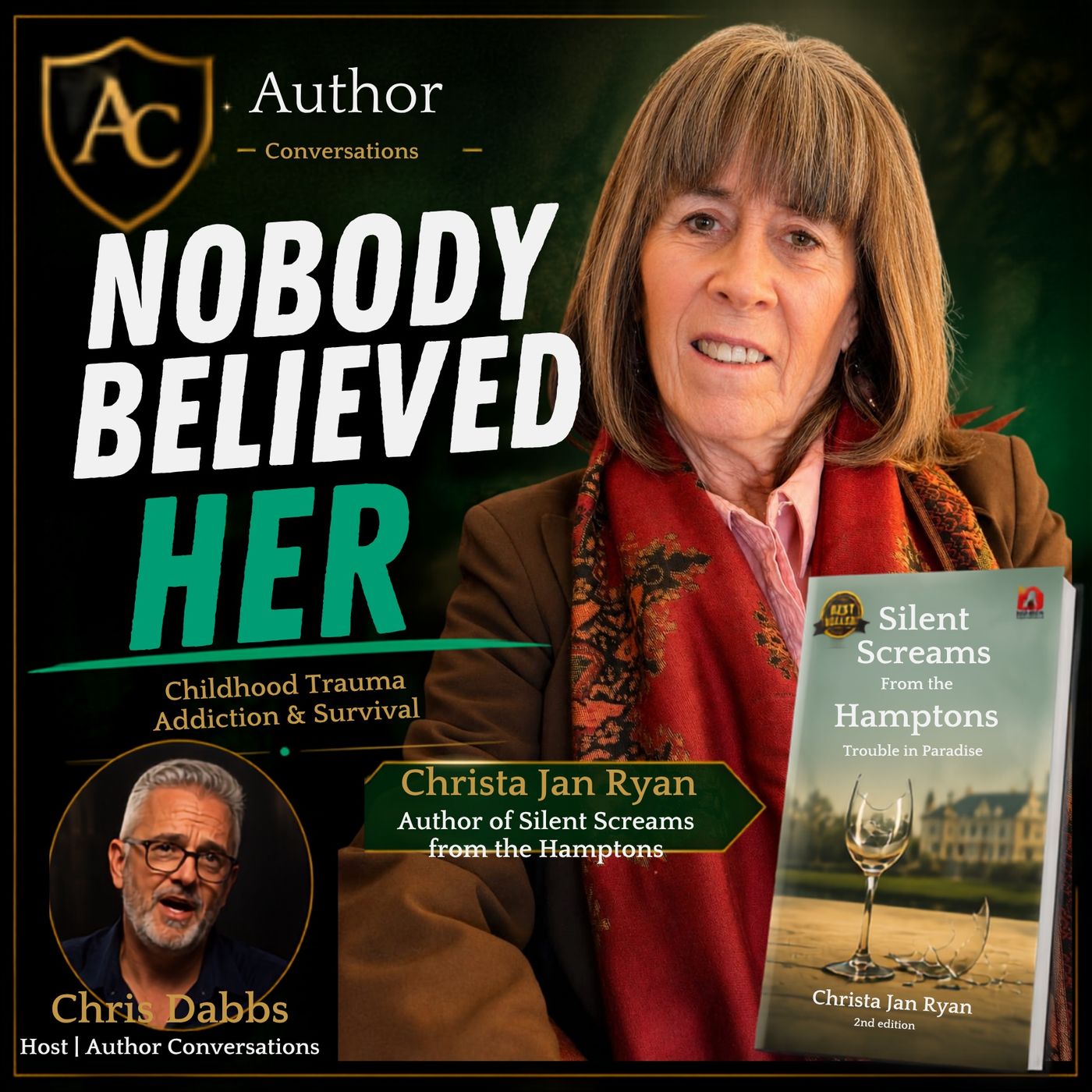
Nobody bought it. Nobody believed it.”
Christa Jan Ryan
What happens when a child tells adults that home is unsafe—and nobody believes her?
Christa Jan Ryan describes growing up in a respected family while trying unsuccessfully to convince adults that she and her siblings were not safe at home. She explores the childhood trauma behind her addiction, the long road to recovery and why being believed is essential to healing.
Her mother was a high-profile teacher, her parents were known within the community, and Christa says her attempts to explain what was happening at home were dismissed.
In this deeply personal conversation, Christa describes growing up amid addiction, domestic violence and fear, and how those early experiences shaped her own dependence on alcohol and drugs.
She recalls trying alcohol at a very young age and feeling, for the first time, relief from the anxiety surrounding her.
By thirteen, she says she was already unable to get through the day without drinking or taking drugs.
But this is also a story of recovery, faith and reclaiming a voice that had been ignored.
Christa explains why treating addiction requires understanding the trauma that propelled it, why survivors need their experiences to be validated, and how her work in recovery and prison ministry transformed her understanding of healing, judgement and human behaviour.
Her memoir, Silent Screams from the Hamptons: Trouble in Paradise, reveals the pain that can exist behind seemingly perfect families and prestigious communities. In This Episode
- What happens when a child is not believed
- The contrast between a respected public image and life behind closed doors
- Growing up around addiction and domestic violence
- Why Christa began drinking at five years old
- How childhood anxiety shaped her later addiction
- The trauma underlying destructive behaviour
- Losing faith after witnessing hypocrisy
- Why survivors need validation
- Lessons from twenty-two years working in recovery
- How ten years of prison ministry changed her
- Recovery, faith and learning to live differently
A quick note before you listen:
You'll notice my audio isn't up to the usual Author Conversations standard due to an unforeseen technical issue during recording.
Thankfully, Christa's audio is clear throughout.
We considered not publishing the interview, but her story of childhood trauma, recovery and resilience is simply too important to leave unheard.
Thanks for your patience—I hope you'll forgive the technical hiccup and find Christa's extraordinary story as moving and inspiring as I did.
CHAPTERS:
00:00 Introduction
02:32 Understanding the trauma behind addiction
03:37 Growing up in a highly traumatic home
04:35 Domestic violence, fear and the absence of safety
06:15 Drinking alcohol at five years old
07:09 How childhood trauma shaped addictive behaviour
08:33 The respectable family image that concealed the truth
08:51 “Nobody bought it. Nobody believed it”
09:02 Trying to tell adults: “We’re not safe at home”
12:14 Faith, protection and childhood hypocrisy
26:29 Why survivors need validation
26:45 Ten years working in prison ministry
32:35 Breaking patterns and refusing to be ruled by triggers
Become a supporter of this podcast: <a...
** WARNIING - THis transcript may not be transcribed correctly due to audio problems - pleae bear this mind. ** Hi there and welcome to Author Conversations. And yes I’m Chris Dabbs but this time I'm joined by author Christa Jan Ryan. Now, for decades, Christa has designed the landscapes for some of the wealthiest homes in the province. Yes, behind beauty, she brings another reality, one that I think is over at all. Now the best send member, Sy. Right, actually it's an award winning bestseller. A reward winning best sending member, silent screens on the ampent, was an honest encounter, a child reformed addiction abuse, survived all the time and it was proven.
It reached number one in ampent and inspired a stage fraction and continues to resonate with readers through experience and difficult time to die for. Now today we'll discuss how child relationships are done with the voice of sex, the three transgressions, what recovery really looks like, of why it's happening the truth, but sometimes stay the right. So after that introduction to the world and the world from the state, it's great to have you here. Well thank you Chris, I really appreciate it. If you could have seen me scrambling to get this on because I'm actually in the throes of editing my next book that's coming out.
But and I just kicked the editor out of the house because I needed to you know, get myself organized. So thank you for having me on. I know it's a very big topic nowadays, basically addiction, but we all know addiction. It's around us. We know somebody who's attached to addiction in our family or friends, but I think what I've been doing, a lot of my work now that I've been doing has been working with the trauma that has propelled the addiction. And I was asked to write for a magazine called, it's called Council and it is probably one of the largest addiction magazines in America.
And one of the things that you know, we can all sit around and talk about 12 step programs, but one of the things that has been helped with my healing has been to understand what propelled my addiction. And so unfortunately, I was a person that came out of a very highly, highly traumatic upbringing. And it's not a different story than most people. The only thing as my publisher had said is that I bookended it perfectly because I had triplet sisters who were all born with cerebral palsy. And usually when I get to that part, people are like, what?
Say that again. So, and my parents were very high profile people. My mother was a physiat teacher coach who worked with kids to go onto the Olympics. My father was a pilot. They did not have the tools or the skills to be able to deal with the impact that having that happened to our family. They were an older brother and an older sister, then they're the triplets, and then there were, then there was me. So, I was number six. And I always laugh when I hear somebody's the last because I know you get away with the most.
But my parents had no coping skills. They drank, they drugged. There was a lot of domestic violence, as you can imagine, because of the heated stress that was in my life. And I would say by the time I was three years old, I was running for cover. And all of the normal things that a child should be getting at that time, love, safety, acknowledgement, just basic safety things that you want to give a child. I didn't get them. And so, that set the stage of high anxiety, extremely high anxiety. And then there was a trauma of growing up and watching the physical violence play out between my parents.
And nobody's really talking about it. But one of the biggest components I found because of my recovery is after the domestic violence would come to make up sex. And, you know, after a long time I started thinking about like, what is up with this? You know, they're beating the crap out of each other and then all of a sudden they're having makeup sex. And it was actually a company from London, a rich woman magazine that explored the psychodrama, psychosomatic aspect, and what happens in a domestic violence situation.
And it made such so much sense to me now after the fact. So, as an early childhood, it's just set the stage for a lot of trauma, a lot of anxiety. And I guess I was about five years old. And the anxiety level was so high in the household. I don't know what the fight was or what was going on. But I actually knocked back one of my parents, whiskey, soures that was hanging around. And I just felt this just like relaxing relief come over me. My heart stopped palitating. I could like relax. And I thought, wow, this is magic, right?
So, needless to say, I didn't stop there. And of course, as the situation unfolded and it got worse, of course, I grew to love the fact that I could take something that would relieve the anxiety and the stress of what was going on in the atmosphere of our household. So, and then when you understand that you're not getting, and this is where I am now, when you did not get what you needed as a child to develop fully, and that's the work I'm doing on my inner child, you start developing behavior patterns that are not conducive to really fully functioning out in society as we know it.
And a lot of its codependency, the complying calmer, codependency that starts to shift shape and make your decisions, your behavior, your friends, your decisions. And so, what ends up happening is by the time I was the routine, I was a full blown eye, I was a full blown alcoholic, like I couldn't get through the day without drinking or drugging. And at that point, I had thrown away probably about seven years of dance. And also I had thrown away a lot of years of piano so that I could continue up the pace of partying with my friends.
So, so it did. It shaped the whole alcoholism, drug addiction, trauma, component, not that I was of it, but it shaped what I had become. And unfortunately, my parents held a very good persona of which I continue to try to impress upon the authorities that what they saw on the outside was what was not going on in the inside. Nobody bought it, nobody believed it. My mother was a high profile teacher. I mean, nobody, they used to call me Sarah Bernhardt because I would be trying to explain to them like, you know, like we're not safe at home.
House would be catching on fire, car garages would be happening. And, you know, you could really get a good representation of the barometer of what was really going on by watching the triplets because they felt very vulnerable to begin with. And then you throw into these episodes that, you know, I wouldn't throw anybody over the edge if you were a young child. I mean, I have raised two children. I know when you're not in safety, the kids pick it up immediately. So those were kind of the components that started and shaped my, I call it my drinking career.
But, and it went on for a long time. It went on for a long time. And I guess I was a high functioning because I was able to get through school very well. But in the end, after the whole school thing was over, those are the, those are when you make important decisions that help you into your young adulthood. And that's where it got dicing. That's where I can actually say, I mean, I survived it. I got through it, but I don't recommend it. I don't recommend it at all. So, but it worked out. You know, I was able to move on to different directions and a lot of learning curves, a lot of lessons, you know, I don't call them mistakes anymore.
That's what I try to do with my children. I try to say, well, it looks like sounds like you're in a really big high learning curve. Sounds like it might be heading towards a train wreck. So you might want to turn that curve the other direction. So you don't end up in the train wreck. And that's all I'll say because I'm really my kids are old enough that I don't want to give advice. They're old enough to figure it out. They should be figuring it out. I figured it out. Nobody helped me. I do and I am very gentle with them when I know that danger is approaching.
But so that's kind of what ended up shaping a lot of silent screams from the Hamptons, which has really gotten a big buzz word of trauma going. Because in that trauma, a lot of people can't get past the triggers. A lot of people can't get past the victimization. And basically, if boiled down to, I don't want to live like this anymore. And so I had a couple of things that happened that really brought me to a bottom. And I joke that I had trapped doors in my bottoms. And my one bottomed, I went sideways for about five years.
So, well, and things will, things will happen the way they need to happen. I mean, I don't, I don't really want to say right now that my life had been orchestrated because I made some really bad choices and decisions. But I always felt the hand of God now that I can look back the hand of God protecting me. And one of the things I've always learned since I returned back to my faith, because one of the really heartbreaking things that happened to me as a child was at a very early age, eight, I picked up on the hypocrisy of my Christian parents and the hypocrisy of the Christian church that was intervening.
And it really set the tone for the rest of my life. Because at that point, what do you know at eight? Not much, but you're intuitive, you're sensitive, you're recognizing two and two is not equal for, you know, I'm thinking now two and two might be three. You know, I walked away from God and I wanted nothing to do with anything that had anything to do with that. And that stayed with me for a long time. And did it shape a lot of my attitude? Absolutely. Did it shape a lot of my decisions? Absolutely.
But one of the things I've learned is that no matter how bad, how hard, how far down you have gotten, when you surrender, you surrender. And that's where usually a power higher than yourself or greater than yourself, who I you know want to call God will meet you. And so those are some really elemental things that shape my childhood. And yeah. Well, that is that's quite amazing. I mean, you know, it's no wonder that you're looking, you know, a stasel, really, it's actually an ornament. I can't see why.
It's that the kind of person you want to have. It just comes and told us that so we really got a good picture of it. But you know, I can't help but think. I mean, once you have a point where you really decided not to cover it for the detail, it goes well basically. You're too much about your family. It's basically better high-class. Well, it became a challenge because I would go in, well, first of all, my parents, my parents had one, my mother had one sibling who played a major role in my life. Thank God.
And my grandmother. And my aunt actually brought me into her gardening realm. And to let me have a garden when I was seven years old. My father was also very interested in gardening. So and my grandmother came in and took care of me when I was young enough where my mother had to get back to work and my father worked. And there had to be somebody. So I was really grateful. It was my grandmother. But what happened is it was kind of funny, but not really. I would complain to them. I had to complain to my aunt and my grandmother all the time.
What was going on? And their denial was so great. But I also think because my mother was a very powerful woman. She was an extremely powerful woman. And so you can imagine a powerful alcoholic. So they wasn't that they were afraid of her, but they were also conflict avoidant. So when you're conflict avoidant, you are not going to go head to head with somebody who is pretty powerful. Right? So they did this smartest thing that they only knew what to do, which is they removed me from the situation and made sure that because I mean, I put up a stink.
I mean, I at that point, I'm like stomping my feet. I'm like, the house was on fire last night. Mom had a car crash the other night. And they're all like, looking at me as much to say, you know, is she making it up? I mean, what wonderland is she? And, you know, like they really, and so they started to realize when the news paid particles started going on. It's terrible to say. And I can't live now because we are all safe. But, you know, standing there reading an article that your daughter or your sister had just been in a car crash or the house that had been on fire, you know, they started to understand like, wow, we've got, you know, we've got something major on our hands.
And so they played a big role on being able to, but the real part I had a hard time going up against was the church who, oh my gosh, because my parents served in the church, they did not want to hear about it. They were like, oh, I don't, you know, I think you better go home and have a sit with your parents and talk through this. And I'm like, no, because by the time I get home, the whiskey sour shakers are going to be going, and by one o'clock, they're going to be off to the races bombed out of the break cells.
So they didn't want to hear it. And the school, oh my gosh, I was like stepping on territory. My mother was a teacher. My mother was so well respected in the school system. And I'm coming in telling on my mother and my sister and brother at this point, they were out. They were like, they had nothing to do with it. So I was left with these poor triplets. And so I just basically ended up going off on my own. And I lay off and joke about it. But by the time I was 10 years old, I was riding my sister's bike uptown because I had a little business because we had no money, because my parents basically drank it away.
And the triplets cost so much money. And there was another, you know, crutch to buy. And there was another wheelchair to buy, you know, so there was no disposable income. And I at 10, I wanted skis, you know, I wanted, I wanted a bike. I wanted things, right? So it got me off to realizing that the only way I was going to get it was to go off and start doing it by myself and earning the money, the capital. So then I made the decision to go off. And I lived, it was lonely. It was lonely because I felt like my opinion didn't count.
What I had to say didn't matter. Nobody believed me. So the heck with that, I just kind of get everything to myself and had to figure things out. Like what was the next safest thing to do? You know, attend. It's attend, want to play with dolls, you know? So it was pretty mature and a lot of the ways that I had to grow up fast. But, you know, I'm working towards this two film productions of the Silent Screams from the Hamptons and working with a producer also about my upcoming book that's supposed to be coming out.
And, you know, he was so nice at the end of it because he did read, writes, you know, he did read Silent Screams and he did read a portion of the book on getting ready to release now. And he sent to me, he says, I just want to say one thing and I thought, Oh, here we go. Here comes the show. I'm waiting for the shoot and drop, right? We're always like, he says, I just want to say one more thing. I said, okay, Matthew, what is it that you'd like to say? And it was earnest and it was compassionate.
I could say he was, I could tell you saying it was with empathy. He said, I just want to say I am so sorry for everything you had to go through as a child. And I thought, you know what, Matthew, don't be because you know what? It's made me into the hard-ass, harnessed person that I am today, the hard-working, the empathetic person, you know, it's created and helped me evolve into what I never got into recognizing how I can be of assistance to that in society with other people because I could spot it.
I can spot it when a kid's being neglected. I can spot when somebody is having a really bad day or they're trying to hide something. I mean, I won't go up and shake them like, what's wrong? But I try to be an atmosphere where people feel safe with me. I never had that. I certainly never had that. And respect and listen to what they have to say instead of saying, oh, that's ridiculous. Oh, well, that can't be. Oh, you know, no, this is their truth. They're speaking their truth. And as a child, that was never allowed.
I was never allowed to speak my truth. So now it's really important to me. It's really important that I not only speak and write my truth, but at that, it's important for other people to understand how important it is for them to be able to speak their truth and to acknowledge that their truth is their truth. You know, whatever it is, it doesn't matter to me, but that's their truth. And I need to respect that. Anybody needs to respect that, right? I mean, you don't see it in society. Don't, and people don't really respect today.
It's all about grandma, about self-respect. Yeah. Yeah. And you have me to go out so early. I'm going to take on all that respect. I'm going to go out and learn money to the party and show to the civil society. You know, I mean, you know, you're on the street. But I think that one of the issues here, I think, is about how children are not listening to. I don't know how you thought through that, where you're telling people what's happened. But they just didn't believe it. I mean, you know, your family did, obviously, the small system didn't do it.
No one else did. They had to believe you. So they must have had to accept that you would just make it all up, like you say, like, some drama, or whatever. But this is the whole point to stay. This is why you're helping people now that they can get the opportunity to be also beautiful, to have a shoulder time, but actively, I guess. Yeah, that it can happen. And so there's a term I've used. It's interesting that what comes out of all this because I'm now realizing I have coined a lot of different phrases.
And the process is identification by association. And I find that people, children, young adults, if they can identify with your, what you've gone through or what you're saying, it gives them that feeling of association. Like, I'm not alone. Like, I can belong to something. Like, there is a solution. So as a child, I never was taught how to problematically figure out solutions because everything was a crisis. Everything was a crisis. Nobody got into the solution. Right? So, so what ends up happening now is on very solution oriented.
And a lot of my writing reflects how I try to help people to understand that it's, you can identify it's okay. And what you're feeling is real. And how you're able to really come to the understanding and conclusion that if I was able to do it, why can't they? And to earnestly show them, and I do that in all my books, all my books, I earnestly show them the steps that I took that helped me out of my dilemma. Is it all going to be all their steps? No, it's not. Everybody's going to have a path. Everybody's going to do different steps.
But here's the one important thing I will never, ever forget. I was in, I homeschooled my children because I was so, oh my gosh, the whole entire school system was a dinosaur. And I just couldn't, I couldn't, I just couldn't do it anymore. And so I homeschooled my children. And I had to make this decision. And I went into this charter school and I was evaluating the school, there's a charter school. And I hit it off with the, with the principal really well. And I, I said something which I, I am so grateful that I spoke up again.
And I said, well, you know, Steve's name is Steve Berman. I said, you know, Steve, I'm a big help advocate. I like to get my hands up in the air and ask for help. And he looked at me because my parents, my family, buried our family because they couldn't ask for help. But what that man said to me, I have carried for 40 years. He said to me, Christa, to not ask for help is to not allow yourself to grow. Whoa, I was like, whoa, like that blew my mind, right? When you, when you put it like that, you know, people suffer with picking up the phone, people suffer from like spilling out what's wrong, people suffer.
They keep it inside of them. They get sick. But when he sent that to me, I thought, wow, I mean, what an advantage to understand the less I asked for help, the less I'm going to grow. Right? Yeah, actually, we actually must have helped. Well, it validated and solidified that it's okay to ask for help. Yo, the house is on fire. Yo, I can't, you know, so it just validated everything. And I know because I've worked in the recovery arena for 22 years, people want to be validated. People want to be validated.
Yes, it happened to you. It was real. I had a prison ministry for 10 years. I need to tell you, I learned more about myself and my interaction with the human race, with these guys that I worked with in prison for 10 years. It was like probably one of my biggest gross spurts in my life. I had to drop myself righteousness. I had to drop my judgmental. I had to drop the idea that I thought I knew I had to drop the idea that, oh, this happened because that happened. And you know what this, if you do that, then this is going to happen.
Well, open up the window, throw that right out because that A plus B did not equal C when you, and so when I gleamed that and understood it, I was like, wow. And all I did with these guys was validate them. I want to hear about the recorcerations. I want to hear about why they were there. It didn't matter to me. It didn't matter. They were there. What are you doing about it now? And the reason why they were there with me is because they were working a recovery program to gain the skills and the tools on what they needed to do when they got out.
Duh. Hello. What a concept. What a concept. Yeah. Yeah. What they. They couldn't have asked for help from somebody, you know, as what experienced them and what you basically, you've done the whole thing. Right. So that just, that just kind of propelled my ability to work in the arena of recovery even more. Because I started to understand that how do you get to recovery? How do you get to your bottom? It matters. It matters. And it's painful. And yes, you have to acknowledge it. But the big question is, what are you going to do now?
You're here. You're at the bottom. What do you want to do? I went sideways for five years. I don't recommend. But, you know, what do you want to do to help yourself? And so that's always been a big aspect in my life when I work with people. I accept it. I validate it. I listen. I try my best to be as empathetic as possible. I understand the concept of victimization and where it can take you mentally. But I always ask the one question I always asked, which really got the guys going, you know, how many of you want to get out?
The hands would go up. How many of you guys want to come back? And they'd be like, you know, they like, they'd have to think about that. You know, it's like, so are you willing to do what it takes not to come back? You know, and that's the same concept that you give the person in recovery or who's at an emotional bottom. What do you want to do so that you never have to end up here? Suicidal, ready to kill somebody, homicidal, suicidal, you know, it happens. It happens. You know, people can allow their emotion.
So, so the question then becomes is, what do you want to do? What do you want to do to get yourself out of this situation? How hard do you really want to work? Do you want to take a pill? Do you want somebody to do it for you? Do you want to do the work that it takes to do it to get yourself out of here and not come back? And how many of you think that, you know, you say, do three, obviously, we want to put up with choices like that. You want to take the right choice, but to do it is to take some, so you work with those prisoners all the way through that trip to help them.
So I mean, are there success stories? You know, Jerry, that's all there is to do. Well, I have one guy I have to tell you, you know, that this is just an exclude. This is he's really an exclusive. A lot of them have stayed out.
This guy's story should be a film. He will. [ Silence ] And blowing his brains out, his father's brains out, and then his mother's brains out at 12 years old. Ran and lived in a cave. Surabelle. [ Silence ] He took, came out, and miracle upon miracle started on Ravley because he did the right thing. All his dreams, all his hopes, everything that he ever wanted to do because he stayed on the path and didn't allow the triggers to propel his decisions, didn't allow the triggers to move them and keep them in the behavior that he was so accustomed to.
Today, he's a fine upstairs. He is now, he is now the chief of the fire department in one of the towns here and runs the town program for the actual keeping the town green and you know, he's under, that's under his authority. Has it been easy for him? No. He's about ready to embark upon getting his pilot's license. Now, would that happen if he had to make the decision? I don't think it's me. I really think it's because because I really feel that if it hadn't been me, there would have been somebody else possibly because there were.
There were groups of people there. But what ends up happening is you give them the choices. He makes the right choice because he understands there's consequences to bad decisions. And you know, a guy's used to greet me at the prison and they used to say, you'll never get to see what I learned today. I'm like, I have no idea or this week or whatever. I'd be like, I have no idea and I'd be like, oh god, I hope it's not how to pick the lock and then, you know, because your mind can always go to wear out and wear.
They could go. He goes, I learned how to pick up the phone and ask for help today. And I was like clapping, shaking, like, like, hallelujah, right? He says something happened and I picked up that phone and I called somebody and so I didn't punch the guy out or choke him. And I was like, good on you, man, right? Because that's the natural thing. You want to choke somebody. You want to beat the crap out of him. He says, I ran the phone and I picked up the phone and I asked for help. I was like, wow, you know?
And I was at that point. I thought, well, maybe maybe I am making a difference, you know? Because you don't know where it comes in. You don't know what, you know? And then there was this whole bus load of the guys that came in. Oh my god, very heartbreaking. And they had just come back from Boston. And they were, and I don't want to talk too much about this, but they had just been bust in to go on trial to stand up against the priests that had sexually molested them when they were very young children.
Kept me, everything I had to keep from crying. Thinking, little young Walter Boyd wants to be in there serving God, little candle boy wants to just, you know, do the right thing and he gets sexually molested by the priest in charge. And these guys, like, are you probably heard of the case that's been going on? It's, you know, it's a big case. These guys were bust into Boston to go on trial. I'm talking like 12 guys. That's a pretty high percentage of inmates going in that have been sexually, you know, so then you think to yourself, holy crap.
If they had been sexually molested, what's the residue from left from that? No wonder they're acting out. No wonder they're in jail. No wonder there's the steal it doesn't mean it's right. They didn't have a mother or a father or a relative or an aunt or a grandmother like I had. And they were left to their own devices, but the anger and the violation that goes along with any kind of rape or sexual abuse is not perfect. And what I ended up learning through the whole aspect is I realized that the most important thing for them is that to teach them that they were not responsible for what happened to them.
Because a lot of them think, oh, if I hadn't done this, if I hadn't done that, if I hadn't gone over to them, no, that has nothing to do with it. So you get to see some pretty horrific things when you're in the recovery world. And it's shaped a lot of my perception that I understand that we're living in a world where my story, which was horrific, was kind of a walk in the park compared to some of these guys. Consider, I mean, I haven't even gotten to the female women that I've worked with. You know, and so everything, everything I can make this, everything in your childhood shapes that whole development of what you can become to what you do become.
And it's just, and unfortunately, we're living in a world today where it's just not great. It's just not things just parents are busy, parents are drunk, parents are beating up each other, parents are high, parents, you know, it's so can it's so hard for a child nowadays to get a break unless they feel a real desire to want to be able to rise above. We're talking about resilience here. It's in terms of your life. Some of these people think that's right to be able to build their own resilience. Those people who are the first people to that drive, you know, that's got a good task as well.
And I don't say it's a fifth descent. How do you think that if you're from a family that suffers or feels trapped, feels trapped by a picture or whatever it is, what would you say to those people if they're watching what's it real classic? Okay, so there is no situation none that I'm going to get teared up. There is no situation that you can't heal from. There is no burden that is so great that you will never be released from. That basically what boils down in every single human being's life is the fact that we have a destiny and our destiny does not be predetermined by who we are.
We do not have to be defined by what happened to us. And that took me a long time to understand that that didn't have to define what my future was going to be. That the choices that I have to make that I can make that I should be making are what's going to help me get along and move forward in my life. But one of the aspects that I am so grateful for is that I was able to ask for help. And I have found that with all that we have created and I don't know about London, but all I know about what goes on in our own little community is that there are so many places you could walk into and say, I need help.
I don't have a meal. I don't have the place to stay. I'm an addict. I'm an alcoholic. I can't go home anymore. My parents are dangerous. There are I don't I know of five places right now that I know of that people can come in maybe six places, maybe seven hotlines that they can call because we're set up for it now. This is like the norm. So each person has to get to that point. It's not pleasant. Believe me, I don't like it when I'm in there. It's a point of brokenness where we learn to surrender and ask for help and take the initiative and the desire to want to go and get help.
I mean, I have seen cases. I have worked through cases. You know, that left me in tears and left me to think I didn't say it, but I think, oh my god, I don't know how they're going to get out of this one. And multiples would start on rattling. Certain things would start happening because we can control the way things work outside of our own little realm. And you know, I'm a big god advocate. And I know that God works all things to the good of those who love them. And you can shoulder God with a lot of responsibility that normally the person would shoulder all by themselves and would probably crack them.
So I just feel like the most important thing I can leave anyone with is that there is nothing that you can do. Nothing that nobody can't help you. That there's so much help out there. You have to understand when you get sick and tired of being sick and tired and you're willing to go out there and do something about your situation. I know there's help out there. I know it. I've seen it. I've I got it. I got the help. And I'm in a situation now where I'm working and helping other people and empowering them because you know what?
I can't do it for them. They could they're the only ones that can do it for them. And by empowering them, they understand that they do have control over the situation. Most people grow up. I grew up. I had there was no control of anything. I'm like, I was sold. I mean, it was like, holy crap. What's going to happen next? So when you relinquish the control in a surrender, you're able to actually realize that you do have control over the consequences of what's going to happen next because you're asking for help.
You're getting it out there. It's your choice. And I don't think a lot of people understand that they are the ones that become empowered and they are the ones that are going to be able to change themselves. It's not going to be a little old me. It's not going to be that little old support group. It's not going to be a book. It's going to be them wanting to do the work necessary to not stay around and on the bottom that they're at. And I think you mentioned earlier a lot about
themselves, but they have to be showing not really that support thing. That it can be done. And I'm not alone. I mean, I'm not alone. I'm not this like, you know, person, no. I just took what it was necessary. The reason why I wrote, the reason why I wrote was my very first book, which was about the death of my daughter. You want to talk about a god of bottom? That's the bottom. I moved sideways for five years. If I hadn't used the tool of writing, I don't know where I'd be. I don't know where I'd be.
So I'm a big journalist. One of the things I really try to impress upon people is to journal. Write your thoughts. It becomes real because when you write things out, you own it. And by it, when you go back and look at that, you're like, wow, I really felt that. Wow, I really thought that. Wow. So what ends up happening is we developed tools. And so for me, it was the ability of learning how to transpose my curts, my habits, my hangups, all of the victimization that I had into a proper place so I could start to get a perspective of it.
What was my part in it? How did I react? What was the right thing? I mean, there's so much that happens to you when you start taking the initiative to start utilizing tools that are out of your comfort zone because you are where you are because you didn't have the tools and you didn't have the ability to be able to understand how to stop what was happening to you.
So it's not a little old me and I'm here to empower the next person who wants to kill themselves, who wants to go out and get shit-facing drunk, who wants to just whatever. You have the power. You have the power to control where, what, and how you want to make that next decision to fulfill your destiny. And you're right, people feel that the wins are right cases, that they don't get the opportunity to choose for themselves, ever, then allowing them to do that or maybe making it more obvious that they can't do that as well as they have to go out and say, but we're actually quick and run back time.
Here I'll fortunately, I could just age, hate to talk about it, but I'm sorry because what you're basically doing is paying for it, to be the key to the key to the key to the key to the key to the key to the key to the way. Because, and I think you should think about this a bit really, you've begun from all of that childhood trauma which you put down in scientific and to the way. And at one of the things that you had before to do, at least for that span in different kind of way, I have seen you do that, you've been achieving most of all ways, especially you think what that's going to happen.
That's going to be all sorts of things. That actually, I have really been the sitting focus and level head of the principal team and you being a matter of right. So yeah, my greatest, my greatest lessons, I always say my children were my, my, my most powerful teachers. And they still are. They're 35 and 30. They're still teaching me stuff. But I have to be willing to listen. I have to be willing to do support against not like the lessons come and I'm like, oh, no, I have to be willing. My part is being willing.
And you know, it's been a wild ride and I can actually, I get really teared up, but to be able to say you're grateful for the whole ride at this point, um, you know, that is the blessing. That is the blessing. And I just feel that my part in it was the fact that I was able to get out my hand and ask for help and decide that I didn't want to look like this any longer. There had to be something better. And I just made that decision, stuck with it and stayed with it until I was able to get through enough healing.
And the healing will come. Because some, I guess, feel that you're going to work. So you're on the stand, you're on the serve, right? So yeah. Yeah. Well, thank you so much for having me on. It was a great show. I want to thank you for a great show. I'm looking forward to seeing the link again. And I just, you know, if you could write in my website where people can get in touch with me, that's great. And, um, you know, I just released the compliant cowgirl, which is a book about codependency. Silent screams is about addiction.
And from the depth of this woman's soul is about the loss of a child. And the book I'm working on right now is how to navigate in the community when your child falls into addiction. That's my new book coming out. Well, thank you for telling us about that. I want to, why don't you tell us about your website? How can people get in touch with you and have the people look at what I do? Okay, so it's www.booksby. And then it's just my first and second name, Christa Jan. So it's www.booksbychrista Jan.com.
And, you know, I don't know where else you could reach me. And if you want to pull up some, a lot of my TV shows are on my website, which is a beautiful website. A lot of my gardening pictures of 45 years are on there. I've been putting a lot of interviews, some really amazing interviews, two of them, which were Anna London, which I was really excited about. I'm actually thinking of, I have a literary agent that's interested in this next book, who's out of London, who's really interested in the book.
So I guess London's where it's at, you know, so. London's very hot right now. Christa Jan. Right. Thank you so much. I'm sharing your incredible story. I mean, you know, at times, super emotes of your own, fond of you. And at other times, super emotes are not thinking about the people that you're helping. And I think that science brings from that to this. A remarkable aspect, so that's all my attention, and I'm obviously it's all about the family. I call it the family of origin because we all have a family of origin.
And I carry that through all my writings because I always go back and forth about where and how the family of origin is doing. They didn't get help. They didn't get help. They're drowning. And it's very sad for me to watch as an adult, you know, that the, the, the, the, they know, nobody got help. Nobody wanted help. Nobody wanted to do anything about their situation. And it's really apparent. So, but you know, the old expression, you can lead a horse to water, but you can't make them drink. So the water's there.
The well is full. And it's really divine. So I would think people would want to get there and slurp it up. So. But yeah, I do. So that's the point. I think going to do it and it's a matter and still turn out to success. So everybody, listen, thank you for watching and listening to all the conversations. I think Chris now, but you guys learn more about the television work with the Western Event, right? So let's check out what I left side, which will put down down there. Well, one more time, Chris.
So what's the website? It is www.books.coksbycrestaghan.com. And there you'll be able to see the whole Danny from, I want to give a plug for Danny from auto books really did an incredible job putting it all together. He accumulated 45 years of my career and one website. So that was really great to look at because I kept saying I did all I did all that. Oh my gosh. I did all. But it started with it. Yeah. It started with asking for help. Simple thing. That's the thing I'm going to take. Yeah, that's the thing I'm going to take.
It's not shameful to help the health. It's bad to help. It's bad to help you. You don't allow yourself to grow by not asking for help. Who doesn't want to grow? Who doesn't want to grow? He doesn't want to. Listen, listen, listen, if you enjoyed this episode, please subscribe. Leave a review on your favorite content, that book and share this conversation with someone. Yeah, and check me out on Facebook. Facebook, Christa Jan Ryan, I have a fan page and big, big page with, I've post everything there.
So check me out on Facebook, tell me where he met you, heard me or met me or whatever. So that'd be great. Yeah, well I look forward to all of this happening. And Christa, I hope you're doing together future with your other thoughts. But thanks for listening. And I'll see you guys in the next episode of all the gutter. Christa Jan Ryan, please be ready to see and hope you have a great day. Thanks, Christa. If you enjoyed this conversation, you can watch more Author Conversations on YouTube. ** WARNIING - THis transcript may not be transcribed correctly due to audio problems - pleae bear this mind.
**
 Apple Podcasts
 Castbox
 Castro
 Goodpods
 Moon FM
 Overcast
 Pocket Casts
 Podbean
 Podcast Addict
 Podcast Republic
 Spotify
 YouTube