Why Smart People Keep Choosing the Wrong Partner - Dr René Vázquez del Valle
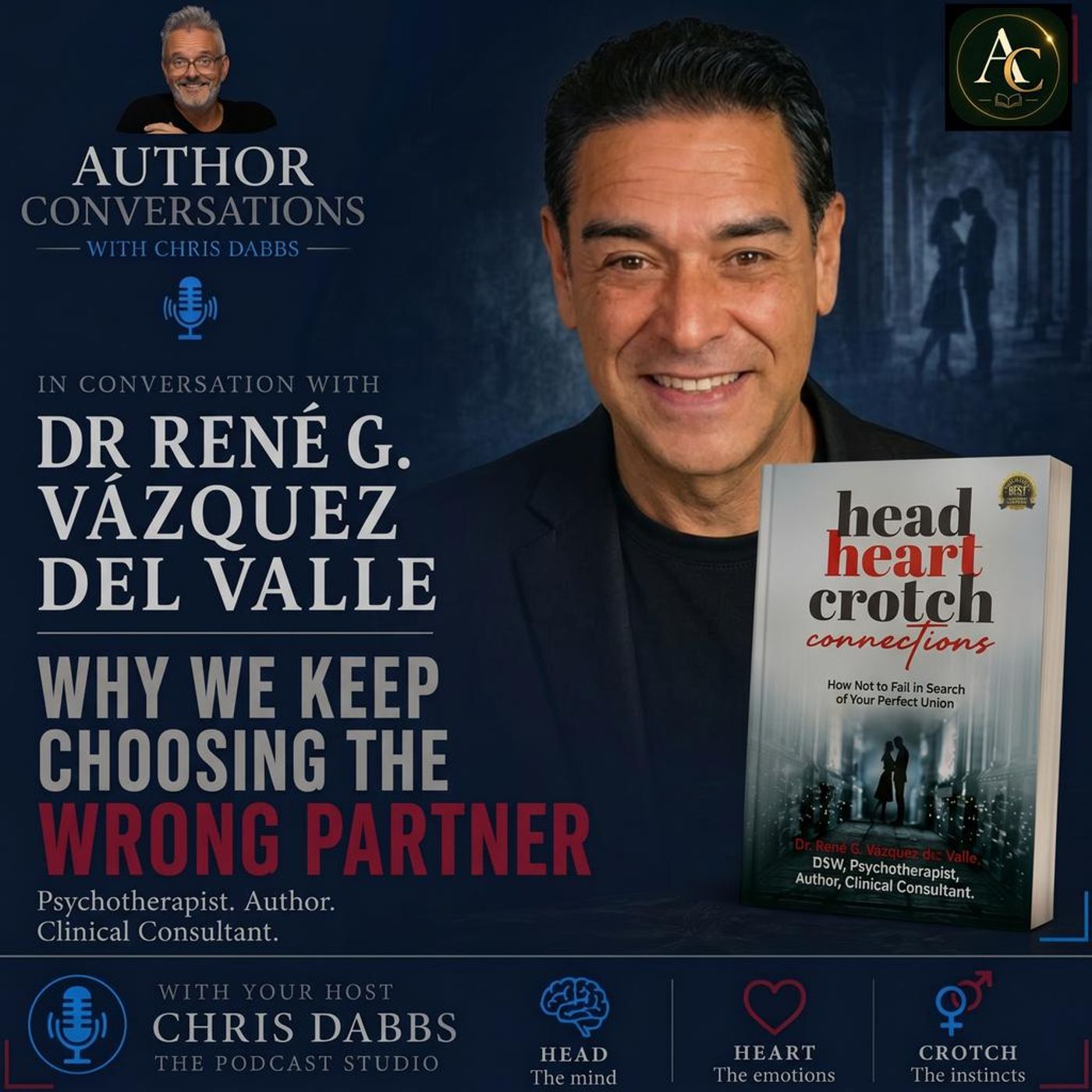
Why do some relationships thrive while others seem destined to fail?
According to psychotherapist Dr René Vázquez del Valle, lasting relationships aren’t built on chemistry alone.
They depend on something far deeper: the alignment of the head, the heart and the physical connection.
Drawing on more than 30 years of clinical experience, René explains why so many intelligent, successful people repeatedly choose the wrong partners, how childhood experiences shape adult relationships, and why attraction alone is rarely enough to sustain love.
Whether you’re single, dating or have been married for decades, this conversation offers practical insights that could completely change the way you think about compatibility.
📚 Book: Head, Heart, Crotch Connections: How Not to Fail In Search of Your Perfect Union
In this episode:
❤️ Why relationships really fail
🧠 The three connections every lasting relationship needs
💔 Why attraction can be misleading
👶 How childhood shapes adult relationships
💬 The communication mistakes couples repeatedly make
❤️🔥 Can compatibility actually be learned?
📖 Lessons from decades as a psychotherapist
About the Guest Dr René Vázquez del Valle is a psychotherapist, educator and former clinical director with more than three decades of experience helping individuals and couples build healthier relationships.
🎧 Watch more Author Conversations YouTube
Become a supporter of this podcast: https://www.spreaker.com/podcast/author-conversations-with-chris-dabbs--6905413/support.
Every book has a story beyond its pages.
In Author Conversations, broadcast journalist, presenter and newsreader Chris Dabbs sits down with the writers behind some of today’s most fascinating books to uncover the research, experiences and ideas that never made it onto the printed page.
Featuring bestselling and emerging authors from around the world, each episode goes beyond the blurb to explore the real stories behind the writing.
From untold historical discoveries and groundbreaking scientific research to personal journeys, business insights, faith, true crime and the human experience, every conversation is designed to inform, challenge and inspire.
Drawing on more than two decades of professional interviewing across radio, television and digital journalism,
Chris creates thoughtful, in-depth conversations that give authors the time and space to tell the stories that matter most.
Whether you’re searching for your next great read, fascinated by the creative process or simply enjoy intelligent, long-form conversations, Author Conversations offers a unique opportunity to discover the people, ideas and experiences behind remarkable books.
Real authors. Real stories. Real conversations.
Welcome to author conversations again and yes I'm Chris Dabbs again your host for today and today I'm joined by Dr René Vazquez de Valle, a psychotherapist, an educator, an author of Head, Heart and Crotch Connections, how not to fail in search of your perfect union. So this is going to be interesting I think. Now René has spent more than three decades helping people navigate. Well basically some of life's most complex emotional challenges. His career has included clinical leadership roles with their New York's mental health services, work with the LGBTQ community, university teaching and private psychotherapy.
So drawing on that extensive experience his latest book explores one of the questions that has fascinated people for generations. Now here we go why do some relationships thrive while others fail? Well his answer centers on three fundamental human conditions. The head, the heart and physical intimacy, arguing that lasting relationships depend on achieving balance between all three rather than just relying on chemistry alone. So today we'll explore the psychology behind successful relationships. The lessons René has learned from decades of clinical practice and the practical advice that he hopes readers will take into their own lives.
So René after that introduction welcome to author conversations it's great to meet you. Well thank you for having me. No no no not a problem. I think this is going to be very interesting for our listeners and readers as well. So you know not only about the book but also about listening to what you say really about relationships because everybody's interested in their relationships right. So you know let's kick off with the first question then. What do you want the reader who's going to be picking up your book hoping for advice to understand first of all by the title before they even pick up your book?
Yes well the title head head heart crotch it's like a modern relation with an older concept of mind body spirit that was you know originally developed by the Greeks you know they coined the phrase because in their way of thinking with perfectly developed individual was that person right who worked on their mind their body and their spirit. So when again when I refer to head heart crotch I'm also referring to mental emotional and sexual connections. The title that I coined is that because it was basically inspired by my patients who I worked with and for them when I presented this conceptualization of head heart crotch it was an easy formula that they could connect to.
They were able to see their difficulties or their failures in relationships in terms of easily saying I have you know intellectual mental connection or I have an emotional connection or I have a physical connection sexual or I don't or it's somewhere it's failing you know so that's how the the title came about and what I want people to understand like by the title is that connections involve alignments right alignments among those three spheres you know where are you developing your connections where are you failing to develop those connections where are they faltering which are the strong ones which are the weak ones.
The second part of the subtitle you know how not to fail in search of your perfect union I focus on how not to fail rather than the concept of success because there are a lot of books on how to succeed right but none other like the five love languages how to succeed and a marriage without having to talk about it a whole array of books on success but none that focus really on failure so in the sense if you don't know what how something fails you don't really know how it succeeds or recognize a possible demise right right now we know that according to the APA right 50% of marriages fail first time marriages and that 65% of second marriages fail so in the face of those high rates of divorce I explore failure you know and for many of my patients failure was used as kind of like a signpost where they could confront those difficulties you know for many individuals failure is very elusive it's hidden away from consciousness they don't know what happened a lot of times and or they experience a lot of shame because of a failed relationship so the purpose of the second subtitle is to in a way demystify and destigmatize failure in general relationships that's a good point isn't it you know at the end of the day
you so what you're helping people to do is I kind of I recognize the signs of failure I guess and then being able to adapt their behavior towards well at least recognizing it and dealing with it that no that's very true yeah that's fascinating actually I mean obviously the title it immediately catches people's attention doesn't it I mean you know it would do and now that you've explained it you know fully it obviously was deliberate from the beginning and because you wanted to really kind of tell everybody exactly what was going on and your ideas and making sure that they're accurately represented in the book right if I titled it my body spirit connections probably nobody would buy it right nobody wouldn't catch attention right no exactly because like you say they've already got ten books there are all about that right yeah no that makes complete sense I think that you know this is the whole point I mean I'm on my second marriage okay and you did scare me when you said 65% of second marriages fail I mean mind you I have been with my wife my second wife for a long time so it's quite well 25 years actually so that's quite a long time I think so I think I'm doing reasonably okay not saying that we didn't we got through it early
sorry well rather but you know I mean you've worked with people for more than 30 years you must have seen all sorts of stuff going on but you know were there recurring patterns that you kept seeing you know that eventually convinced you that you needed and you must write this book for people I think is that how is your recurring patterns but where you begin to see a relationship fail for example is because of the nature of the disconnections where the person fails to recognize or they undervalue the nature of their connections whether it's an optional connection mental or sexual connection if they don't see that there's a vulnerability or a lack of connection in one or one or two of those areas they don't recognize how that affects the intimacy you know so working with them you know I got them to identify what their connections actually are some of the things that recalls like failures in relationship sometimes has to do with the person's ability their stick to it is their willingness to stay in connected you know do they employ a like a flight or fight response in the nature of their connections so they fight to stay connected or do they flee immediately when there's a problem the people who fight for a connection
or what I used to call the worried well you know whereas the people who would flee were the walking wounded you know they often don't have the resilience and the strength to stay in a relationship other reasons why a relationship could fail as to do a lot with like what we call fantasy bonds where you connect to someone based on what you wish they would be for you rather than what they actually are right other reasons why failures are happening have to do a lot with modes of communication the way we're communicating now you know through technological use of you know social media I think we're probably have more means of communicating and saying less and less you know we talk now in snippets and sound bites which do not force the connection they actually inhibit connection and create disconnection sometimes when you misinterpret what people are saying to you you know over texting and things like this so all that is also influencing you know success and failure rates totally totally you know I mean I speak to authors who write about perhaps maybe social media you know and how it affects us at the moment and then other people who who are talking about relationships as well and you know that this comes across a lot people nowadays and I look great
here I'm old okay so I'm gonna start going on down the old oh social media kind of route but I think it's really true my two children are coming up to around about 30 now and and they just about escaped the worst of it I think but if I look at my niece oh niece is I should say not just one but and other people that I teach because I also teach at university and so all of those people you can see that it's different and you can see that yes the sound bites you've hit it right there you know it is literally type type type text or not even text what's that whatever it is and so I mean do you think that because of this right people think that there should be that that right person in the world you know that they that they think their compatibility is just about finding that right person and because of this they're really fast to choose and so this is why we have dating apps that are basically the swipe left swipe right they're fast to connect and they're fast to disconnect yeah well yeah I call it technological disconnections right where you get rejected online they don't even meet with you anymore they either begin to connect with you and then if something happens and before you know it they've ghosted you right and you have no idea how or what you connected to
it was never real discussion of it you know an exploration of it so it occurs a lot especially now you know which is really again quite I'm sorry to keep going on about me but this is why I find it quite exciting I met my second wife 25 years ago on match.com believe it or not right so quite amazing really so what I did is I purposely widened my my sphere to look for people who are outside of my immediate area because normally we go to work obviously we meet people at work we meet people through friends we meet people maybe you know socially out but I thought I'd do that and I must admit it was quite an interesting ride even back then and of course when I tell millennials and whoever else that we met 25 years ago match.com they're like whoa was it even around the internet wasn't even around anyway so but I'd say our our relationship is reasonably successful to be fair do you think that success for relationships and I'm not saying it is right but it's reasonable I mean do you think that there are skills that can be learned by people to to to let me ask that question are there skills absolutely they're actionable skills and what I call the six w's of connection where you begin to identify who the why the what the which the where and the when of your connection so when you say
who what is it type of person that you connect with the why what is it why do you find that person attractive what would be what is the order of your preference or your connection is it head heart crotch is it heart crotch head you know what is it that for example the which which are your preferences for example do you prefer a head heart crotch connection or do you start off with a crotch heart head connection any what any permutation of those right the where where is your strongest connection right where is your weakest connection the when when does something not work so those six w's are skills that you explore and you have them consider to analyze that and not only analyze their six w's of connection but which is sometimes harder for them to do is to analyze their partners connection to them yeah I bet you're partner likes about you in terms of head heart crotch right because you'll find that sometimes it's not what they thought it was many times the partner will always tell them no that's not the order of my connection to you right I like this this and this so that synchronicity in connection sometimes has to occur where you where you understand your connection and you understand their connection to you you know it's it's
vitally important you know yeah I suppose it is and you know breaking it down like that you know your framework is basically suggesting intellectual emotional and sexual connections and you're kind of saying that they all need to work together and I can see that you know if you break it down analyze it and look at what's going on then yeah you know that's fine basically you question their connection so intellectually do you value the way they think their values their thoughts what they espouse how they express themselves do you value that do you enjoy it emotionally do you appreciate their emotional expression towards you are they gentle they kind of they loving are they giving you know that is analyzing the emotional part sexually are they willing to please is the relationship mutually gratifying or is it self-centered when cited that's the way you look at each one of those fears and question it and determine what is it that I'm looking at when I look at head heart crotch right and so what so what actually usually happens then when someone is more focused on one of them it doesn't have to I guess it can be any of them right so what happens when when one of those three is significantly strong well usually the stronger one they don't have
to work on it's always the weaker connection right the weakest link like the show yeah that you can consider I get them to to look at the words that they use because words create our experiences you know they define our lived encounters you know if I get them to use new ones to descriptive words to describe those connections the more new ones then the more descriptive the more you create internal imagery right and that imagery then creates bonds of attachment bonds of attachment is what increases your connection so if I used to like if a patient would come to me and say oh I like him he's very bright you know that's the until at least bright but that's not enough because it's not new ones then describe you know could you say more about that person could you say they're curious they're open-minded they're sophisticated they're intellectual they're unbiased they're impartial the more new ones and descriptive words you use the more you make that connection and to that an attachment to that person be it intellectual be it emotional so if you're able to say more than just that he's a loving person can you say he's heartwarming forgiving trusting spiritual pessimistic and then looking at the contrasting states if what you're suffering from is
that your perception is that the person is envious jealous vengeful depressed distrustful that imprints on your being right and you're not seeing the other side of the coin so getting them to see contrasting states in their description and have a what they ascribe to their relationship is very important it can overcome this inhibition it can oh disconnection it can create attachment where attachment wasn't fair you know what creates in a sense what creates success is when there is synchronicity right in attachments so you get them to understand their attachment style right a lot has been written now these days about you know how attachment style influences our ability to connect in a healthy way so if you suffer from an anxious attachment or an avoid an attachment or an ambivalent attachment what does that mean for your relationship right you have an actions attachment that means you're often leery and reticent to get close if you have an avoid an attachment that means you're fearful with trepidation you know if you have an ambivalent attachment that means it's imbued with uncertainty that lack of stick to itness you know so understanding your attachment style also helps you in creating connection it's amazing I mean I'm not sitting
listening to this I'm thinking yeah yeah yeah I could I quite like the way that this happens you know so in other words you're kind of you know analyzing and getting there but then you scared me when you said about communication and finding out what my partner thinks about me right this is my wife this one for many people yeah they haven't thought about it before maybe because of tendency to be more self-focused you know and what is it you like or you want or what is it you actually getting you know and to move beyond that into what about your partner their connection to you you know is it what you think it is you know and the willingness to ask them you know in couple therapy it happens a lot in individual therapy I get them to think about it but in couple therapy they're sitting there and they're going to tell you yeah the order of my connection is this what I got with you was not my preference you know but I'm living with it or I'm dealing with it you know I prefer a head heart crotch connection but with you I got a hot crotch head connection that order you know in therapy I would get them to approximate right percentage wise for example your head connection what is it 70% your heart was 20 and your crotch is 10 or is it your
crotch is 50 and the head is 20 and the other one is 30 so getting them to even approximate percentage wise the nature of their connection was helpful to them you know so if I only had a 10 percent heart connection I got to work on that but that's what needs to be worked on you know because they come in again not quite clear what the disconnection is exactly so you get them to label it approximated percentage then they can something to tool that they can use to establish a conversation at least you know so if they uncover for instance I don't know one of them that's way out I don't know maybe for instance the emotional side no not the emotional let's look at the intellectual side okay because I think that's probably something that that would come across especially in this day in age of this social media or the internet kind of dating kind of thing intellectually then if someone falls I don't know or someone says oh yeah you know I used to like this person for because it's 70% intellectual whatever and now it's come back it's gone right down to 10 percent of that or even love or heart or whatever it is I mean you would explain well what happened what happened to your initial impression if it was 70% your attraction to that person
what did he have that got him that 70% was it because he was wise and rational and brilliant objective sophisticated what happened along the way how did he become inflexible prejudicial judgment did that actually occur or is that in your head is that your perception or is it reality can you reframe your thoughts for example if it's because it started positively and it moved in the negative direction can you recall times in your life experience when it was that wasn't the case you know so it's about imagination it's about fantasy you know if it doesn't happen in reality can it happen in fantasy you know so that's interesting interesting point we reframe and recreate your inner attachments in other words or have you totally lost those initial perceptions that you had because it does change over time even the order of your connection can change over time the changes with age you know what you initially and that has been my experience in therapy that what initially attracted to someone to someone whether it was that order headhawk crotch 10 years later it's no longer that order you know it's changed you appreciate other things about them perhaps their heart above their intellect or their sexual connection you know or you appreciate that more
sexually after 10 years than you did initially you know so connections are not fixed and inflexible they are not you know they're not static they're fluid and they move you know what the order and your preference as well Rene this is complicated stuff complex stuff right it's hard yet it's very simple if you think about it yeah it's a formula right mental emotional physical you mentally enjoy that person and a steam them you emotionally appreciate the emotional expression towards you and sexually are you pleased and satisfied with the sexual encounter is it mutually gratifying because based on the studies about sex the thing that's most relevant to a successful really sexual union is mutual gratification that's the one number one factor that bonds people if they're not mutually satisfied there's which starts going downhill I can imagine because you know the other person is just left behind right no I say that fantasy enters wherever you have a weakness in those in one of those three spheres that's where you begin to look outside right so if you don't have an intellectual connection with your partner what do you do you start looking for people outside who do who you connect with intellectually if you don't have emotional connection you start
looking for that someone who you connect with emotionally and clearly if you don't have a sexual connection that is probably what you're going to look for an affair a sexual relationship right so it's important to identify where is it that you're it's faltering so that you could work on it to avoid that displacement outside of the relationship amazing yeah I think that this is the point isn't it it's about communicating and understanding and also I I know that's tried to say actually communicating and understanding of course it is but yeah I think that this is where a book like yours that looks at it from a different point of view actually helps a lot because yes it's complicated I think it's complicated right maybe you're going to think about it or maybe think about that but I think your book is probably going to help everybody I mean you know give me some example of people because you are a practicing psychotherapist I mean you've heard countless personal stories so obviously in confidence you know without really revealing anything but what's a particular experience that our listeners and and viewers can sort of like get behind that you can share with us that reinforce really the importance of all of those ideas and to try and get people to not be
concerned about it read the book take the instructions and change their lives for the better really I in the book I do give a lot of several case examples of people that I've worked with and explaining where were they when they first met the person you know what was their preference what was their order of connection and because I worked with them over time what they first came in with was not what they wound up understanding by the end you know of the therapy many times a relationship was saved by connecting in a different way by re-evaluating what was missing working on it and it taking more importance in another level of connection so when they were missing the emotional connection and they thought they only had a sexual or physical or intellectual connection they worked on talking with their partner about the lack of emotional connectivity right and what they felt they needed emotionally from that person you know once they began they started getting it or failed to get it it determined whether they were able to stay in the relationship or leave it you know if they never got what they needed they came to the realization that this is not working so they were cases where as a result of analyzing the headhark watch they broke up the other person was not willing
to connect in the way they felt they needed but in most of the times exploring the connections actually helped improve you know it didn't cause a separate disconnect it caused more of a connection and I in the book I give you know five or six case examples of how that occurred oh excellent okay well that's good I think we all learn don't we through case studies and you know no totally so we're running out of time right I mean this is this is always the problem with these conversations because this is fascinating stuff but we've got we've still got time for a few more questions so I mean was there anything that I this hopefully you haven't been asked this before but was there anything you discovered while writing the book that challenged your own thinking about relationships I mean though I think there were three chapters that I enjoyed the most writing about and as chapters were on how trauma affects our connections another chapter that was called how familiarity breeds contempt and then of course a chapter on age and how age affects our connections I think I learned the most from that because I've worked with so many people who've had traumatic life experiences from abuse sexual abuse physical abuse emotional abuse as children
and how that affected their ability to connect in a healthy way as adults you know helping them to see the difference for example between shame and guilt when you suffer from toxic shame how does that affect your ability your thoughts your emotions and your sexual nature the difference between feelings and emotions you know that they're not the same thing that they used interchangeably but feelings are not the same things as emotions emotions are subconscious feelings are at a conscious level your you know psychologists have only identified like about six different emotions happiness sadness disgust fear surprise and anger but there are many more feeling states than there are emotions feelings are the outward representations of your emotions so teaching my clients my patients to identify feelings from emotions that was something that I learned was so beneficial helping them understand toxic shame issues like toxic masculinity how does that work itself out in a relationship how it could be destructive to a relationship you know the issue of age you know do we do we appreciate and all the person because of how long they've lived or you know all the right things they've done or because they've lived so long they've made a lot of
mistakes right as a through age you learn a lot you know it's a whole all expression um so appreciating the changes that occur with age you know that has been a learning experience for me which I talk a lot about in the book you know and and like I said in trauma how trauma in childhood affects us totally a very wise I'm going to say I mean yeah exactly the I think the the age things for me anyway it was really interesting obviously in a 25 year relationship and getting on in age a bit you know things do change and you mentioned this earlier on as well about how the the ratios between head heart crotch can change and move and all those things and I think it's important that everybody understands that as they move on you know I mean at the end of the day especially nowadays it appears that you know lots of divorces are happening later in marriages so people are married for about I don't know 20 25 years say uh and then they break up and for somebody they just realize they want to go their own way they want to do their own thing but and I think the people kind of like um agree with that to do it right because it's just you know whatever but I think if that always leaves one victim at the end right that actually doesn't feel
like that I mean is that you know and poor that must be really tough so well and what sort of advice would you give to people who are in that position for instance who are older who have been together for a long time or relatively long time and you know they just like there's nothing there as far as they're concerned what do you think that nothing exists anymore for them in terms of the connection to their partner is that wake up in the morning yeah you know it's like oh yeah all right how you know hi how you doing whatever but yes there's no connection that they feel and this is what I was saying about older people getting divorced you know connections are also a choice you can choose to work on them or you could choose to avoid them and again relationships will either evolve or they'll fail to thrive you know um and I offer I believe actionable advice of how you can relive them how you can make them thrive again you know but it's a choice it's a conscious choice that one makes you know also in my book I give them a scale that they can use to rate themselves and rate their connection from very connected to somewhat connected to neither connected disconnected to somewhat disconnected to very disconnected when you use that scale and you
look at and you explore you see where you are personally you know and where you need to explore more look at you know so in my book the acculturation of the um the connection scale is used as a tool for people to begin to identify where they're at you know and it's given free on my website so even if they don't read the book they could use the tool the scale to analyze where they're at you know perfect what makes me think about this as well is that when you were saying it's a choice right it's kind of and I'm going oh yeah yeah of course it's a choice like really quickly but that's not a simple choice right or it's it's not something simple choice but it is within one's volition and one's agency to make that decision based on some analysis you know may find that you've lost that headhawk crunch connection it happens that might be the decision you need to say it's over I'm stuck here but I need to move on right that's equally valid you know not every ship can be saved some to separate and move on me exactly no I remember I was specifically asking about that because my grandparent I think when I was seven oh not when they were 70 my grandmother said I've had enough of this this is it I'm out of here
and she went to move to Vancouver for like six months or a year whatever it was but she came back to be fair and they kind of continued until they well were no longer alive so you know and they were married all their lives so they did they did pretty well I think you know my grandmother did 80 found some and she described the nature of her connection to him she lasted 10 years until they passed but it was her happiest 10 years of her life you know see oh my gosh that's really good that's really good news isn't it because this is what I'm saying about the older people you know about being and I don't have to be 80 or 70 you know 60 50 40 whatever you know they're not they're not 20 swiping left right and all that sort of stuff I mean if we're going into second relationships third relationships fourth one you know I mean serious relationships you know we're in a situation where we need to be thinking like that you've mentioned so brilliant ready we need to bring this to a close though so you mentioned on your website you're giving away advice obviously you're giving away bits and pieces what's the website address it's www.drfordoctorvdelv.com so it's vascular silvia so it's drvdelv.com yeah drvdv.com excellent okay don't worry we'll
right dot com yeah right yeah we'll put it in the description as well but don't worry but I think it's really nice of you to be able to give that to give that to people so well there we are we are out of time now so doctor ready so book has been translated into Spanish so there's this Spanish version as well and it's called kareza koreza on korepa con exonis so it's in english and Spanish you know and I'm sorry I was a miss there because I saw that and I thought to myself it's really obviously it's quite rare for it to be translated right in in whole in a book like that so that is good and I meant to ask you about that so thank you for pointing it out we'll put all of those on the on the links in the description down below so you know don't worry that'll be there and everybody you know this is great so you're you're dealing with english language being with Spanish language that's all you need is mandarin and you'll be away so there we are drvdv.com thank you very much for joining me on author conversations so having me no not at all headhard crotch connections offers a thoughtful and practical look at my relationships succeed and drvdv.com was the the vae you have been fantastic to talk to about this I mean you've
explained how well basically relationships can fail and how greater understanding of ourselves can help us build stronger healthier relationships I think and if you'd like to know more about drvdv.com and his work you'll find links to the book and his author page as I say we'll make sure they're in the description below and don't forget of course if you've enjoyed this conversation please follow author conversations for more interviews with writers experts and thought leaders exploring the ideas behind their books drvdv.com thank you very much for joining me again it's been an absolute insight to talk to you about this and I'm going to walk out with my studio and go and see my wife and see which she has to say about everything so thank you I appreciate it thank you it's been my pleasure brilliant thanks bye bye if you enjoyed this conversation you can watch more author conversations here [MUSIC]
 Apple Podcasts
 Castbox
 Castro
 Goodpods
 Moon FM
 Overcast
 Pocket Casts
 Podbean
 Podcast Addict
 Podcast Republic
 Spotify
 YouTube